Stay updated on the latest at OSS, and check out the July/August Edition of our newsletter!
Click Here to read our latest newsletter.


Stay updated on the latest at OSS, and check out the July/August Edition of our newsletter!
Click Here to read our latest newsletter.
Operative Treatment for Clavicle Fractures (Broken Collarbone)
Clavicle fractures are often caused by a direct blow to the shoulder. In sports, it usually occurs when an athlete is tackled in a football game, falls of a bicycle, or gets body-checked into the plexi-glass of an ice rink. It can also happen during a fall onto the shoulder or a car collision, a fall onto an outstretched arm, or in childbirth, when the baby is passing through the birth canal.
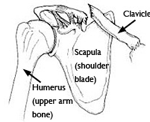
The clavicle is a long bone and most breaks occur in the middle of it. Occasionally, the bone will break where it attaches at the ribcage or shoulder blade.
Symptoms
Clavicle fractures can be very painful and may make it hard to move your arm.
Additional symptoms include:
Evaluation by an OSS physician
In order to pinpoint the location and severity of the break, your OSS physician will order an x-ray. X-rays of the entire shoulder will often be done to check for additional injuries. If other bones are broken, your doctor may order a computed tomography (CT or CAT) scan to see the fractures in better detail.
If your bones are out of place (displaced), your OSS physician may recommend surgery. Surgery can align the bones exactly and hold them in good position while they heal. This can improve shoulder strength when you have recovered, if displacement is significant. A recent large study showed improvement in function with operative repair when the fracture is significantly displaced.
The use of Plates and Screws
During this operation, the bone fragments are first repositioned into their normal alignment, and then held in place with special screws and/or by attaching metal plates to the outer surface of the bone. Newer locking plates are contoured to give significant strength while minimizing the prominence of the plate. Many patients notice immediate improvement in the disturbing bone movement right after surgery.
After surgery, you may notice a small patch of numb skin below the incision. This numbness will become less noticeable with time. Because there is not a lot of fat over the collarbone, you may be able to feel the plate through your skin. It is important to start full range of motion soon after surgery.
Plates and screws are sometimes removed after the bone has healed, but that is up to the patient’s discretion. This is a much smaller procedure with little down time, usually 4-6 months after the original surgery.
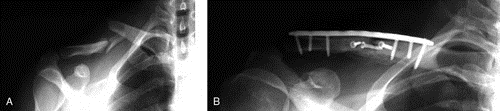
(A) The clavicle is broken in more than one place and the fragments are severely out of alignment. (B)The fractured pieces are held in place by a combination of plates and screws.
Specific exercises will help restore movement and strengthen your shoulder. Your OSS physician may provide you with a home therapy plan or suggest that you work with a physical therapist.
Therapy programs typically start with gentle motion exercises. Your OSS physician will gradually add strengthening exercises to your program as your fracture heals.
Although it is a slow process, following your physical therapy plan is an important factor in returning to all the activities you enjoy.
People who use nicotine, have diabetes, or are elderly are at a higher risk for complications during and after surgery. They are also more likely to have problems with wound and bone healing. Be sure to talk with your OSS physician about the risks and benefits of surgery for your clavicle fracture.
There are risks associated with any surgery, including:
The risks specific to surgery for collarbone fractures include:
Outcome
Whether your treatment involves surgery or non-surgical treatment, it can take several months for your collarbone to heal. It may take longer in diabetics or people who nicotine.
Most people return to regular activities within 3 months of their injury. Your OSS physician will tell you when your injury is stable enough to do so. Returning to regular activities or lifting with your arm before your doctor advises may cause your fracture fragments to move or your hardware to break. This may require you to start your treatment from the beginning.
Once your fracture has completely healed, you can safely return to sports and daily activities.
What to discuss with your OSS Surgeon
If you would like more information about clavicle surgery, call Orthopedic Specialists of Seattle (206) 633-8100 to schedule an appointment with an OSS surgeon.
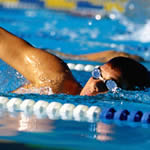 Swimming is a sport in which there is a great diversity among participants. There are both recreational and competitive swimmers, ranging in age from preschool through college.
Although the lack of impact in swimming makes it a perfect choice for avoiding lower-body injuries, the intense involvement of upper-body muscles makes overuse injuries a real possibility.
The most common swimming-related injury is swimmer’s shoulder, shoulder pain usually caused by rotator cuff tendonitis. Many cases of swimmer’s shoulder can be successfully treated through physical therapy.
For competitive athletes, rotator cuff surgery may be recommended if shoulder pain continues after 6 months of guided rest and rehabilitation.
According to Dr. Franklin, “Proper warm up, stretching, technique and conditioning are crucial in preventing tendonitis and overuse injuries in swimmers.”
If you believe you are suffering from swimmer’s shoulder or swimming-related injury and need specialized orthopedic care, the orthopedic surgeons at OSS provide excellent treatment options for your injury. Please feel free to contact OSS at (206) 633-8100 to schedule an appointment.
If you have not already, join our email list, to learn about all the latest news and events going on at OSS!
Check out our June Newsletter Here.
June is the quintessential month for weddings. The phrase “June Bride” is in our vernacular, conjuring up images of a beautiful bride, a handsome groom, family and a spectacular and exotic honeymoon.
Before the wedding takes place however, there is the all-important engagement photo shoot and for that, women throughout the country are acting on a new trend – plastic surgery for their hands, also known as hand rejuvenation or “handlifts” to show-off their beautiful diamond ring.
This new trend is rooted in today’s social media practice called the “selfie”. Newly engaged women are excited to show off the ring on their finger and post it in social media outlets like Facebook and Instagram. “Selfies” have made society more self conscious of their appearance including their hands. “Handlifts” have gone up 40% since the rise of social media.
According to Dr. Weil, “Next to our faces the hands are the most recognizable and exposed parts of the body. The hands are often forgotten when it comes to rejuvenation procedures. However, they are one of the first areas which are noticed by others, especially when there are years between the appearance of your face and hands. Just like our faces, our hands will show the signs of aging. In some cases our hands may even make us look older than we are. As we age our hands lose fat– along with collagen– which decreases the elasticity and leads to thinning of our skin. This can cause the skin to become loose and wrinkled and cause the veins and tendons of our hands to become more prominent. Today, however, Dermal Fillers (Juvederm, Restylane, Perlane, Radiesse, etc.) have become an excellent option for restoring the volume and smoothness that our youthful hands once had.”
Dr. Weil’s dermal filler of choice for hand rejuvenation is Juvederm Ultra XC. Juvederm Ultra XC works by restoring the volume of hyaluronic acid in your skin, helping to reduce wrinkles and smooth out folds. Hyaluronic Acid (HA) is a naturally occurring sugar found in the human body.
Hyaluronic acid creates volume in the skin by delivering nutrients and by holding in water, making sure the skin stays hydrated. Its function is very similar to that of a sponge–it soaks up and absorbs water–which in this case creates volume in the skin of your hands. Dr Weil goes on to say, “Think of hyaluronic acid as the body’s internal moisturizer!”
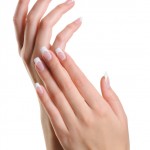
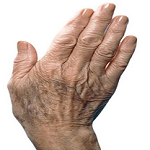
Pigment changes and dark spots occur as a result of sun exposure. The thin skin becomes wrinkled and has far less elasticity.
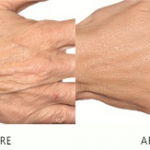
Using dermal fillers to restore the volume and smooth away wrinkles of the hands is a procedure with little discomfort and no downtime.
If you would like more information about hand rejuvenation, call Orthopedic Specialists of Seattle at (206) 633-8100 to schedule an appointment with Dr. Weil.