Our September newsletter is here! Catch up on all the latest news and events here at OSS.
Click here to read our newsletter.


Our September newsletter is here! Catch up on all the latest news and events here at OSS.
Click here to read our newsletter.
Week four of the Seattle Seahawks football season has taken a few hits. Eight players are on this week’s injury list. It’s a reminder to both professional and non-professional athletes that playing smart is the best way to reduce your chances of injury in this contact sport.
The 8 Most Common Football Injuries:
Not including head injuries, the most common musculoskeletal injuries include:
1) ACL injuries – The anterior cruciate ligament in the knee can become damaged or torn when a player is impacted from the front or rear.
2) MCL injuries – Injury to the medial collateral ligament in the knee is also very common because it occurs when the knee is impacted from the side.
3) Torn meniscus – When a player rotates their body while a foot stays planted, the knee can twist, causing the meniscus to tear.
4) Ankle sprains and strains – Perhaps the most common injury in all sports, ankles are susceptible to soft tissue damage when pivoting, changing direction, or putting too much pressure on the joint.
5) Muscle contusions – A strong impact to a large muscle, usually in the thigh, can cause a contusion. This is basically a large, deep bruise that can impair muscle function.
6) Torn hamstrings – Bursts of speed can cause the hamstrings to tear if the player is not conditioned or properly warmed up.
7) Shoulder tendinitis – Frequent throwing can cause overuse injuries like shoulder tendinitis from repetitive motions.
8) Shoulder separation or dislocation – A direct blow below the shoulder can cause a separation of the acromioclavicular joint, while a dislocation occurs when the head of the humerus detaches from the scapula.
The treatment protocol for these football injuries varies and can range from basic RICE (rest, ice, compression, elevation) to surgery, with several options in between. For all of these injuries, RICE can be improved with active cold and compression therapies to help speed up the healing process for injuries. Cold compression therapy can also be used after surgery to help speed up the recovery process.
According to Dr. Peterson, “While injuries are an unavoidable consequence of contact sports, indeed any sport, the risk of injury can be dramatically lowered by proper background training and techniques. Additionally, proper conditioning can speed recovery times after injury reduce the chance of recurrent injury.”
Here are some helpful tips on how you can reduce your chances of a football injury:
-Have a pre-season health and wellness evaluation
-Perform proper warm-up and cool-down routines
-Consistently incorporate strength training and stretching
-Hydrate adequately to maintain health and minimize cramps
-Stay active during summer break to prepare for return to sports in the fall
-Wear properly fitted protective equipment, such as a helmet, pads, and mouthguard
-Tackle with the head up and do not lead with the helmet
-Speak to a sports medicine professional at OSS if you have any concerns about football injuries or football injury prevention strategies
If you believe you are suffering from a sports-related injury and need specialized orthopedic care, the orthopedic surgeons at OSS provide excellent treatment options for your injury. Please feel free to contact OSS at (206) 633-8100 to schedule an appointment.
The 2014 US Open Tennis tournament was filled with ups and downs this year. Mirin Cilic beat out some top seeded players to win the men’s championship and the favorite on the women’s side, Serena Williams won the title. Years of training, wins and losses have been part of any tennis player’s repertoire, so have injuries.
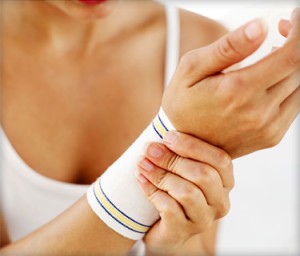
Wrist injuries are common for tennis players and elite professionals. The anatomic location of the wrist and its major role in the kinetic chain needed in stroke production, it is unfortunately a common site of pain and disability. Often, the pain presents on the pinkie-side, or ulnar side, of the wrist.
Many players experience this ulnar pain in the non-dominant hand during two-handed backhand strokes. In this stroke, the top hand is placed in extreme ulnar deviation and extension, while dynamically moving from supination to pronation. This same motion-type occurs in many tennis strokes, and as such can lead to acute and chronic ulnar wrist injuries.
Tennis players can present with an acute event of sudden onset – either after a violent fall with the wrist in extension and pronation/supination, or after hitting the tennis ball and having an immediate feeling of ulnar wrist pain. According to Dr. Weil, “Ulnar sided wrist pain in tennis players can often be due to tendinitis and can be treated in a conservative fashion. Sometimes degeneration of the cartilage of the wrist can occur.
If you are experiencing pain for more than a few days while playing tennis an evaluation by an orthopedic surgeon is recommended.” When the presentation of pain is chronic and insidious, the ulnar wrist pain arises over the course of days or weeks, and the athlete usually cannot recall a single inciting injury.
Wrist injuries in tennis players often result from over-use, improper technique, and even using the wrong equipment. Also, excessive wrist motion during the stroke will predispose a player to injury. Some things to consider to help prevent ulnar wrist pain:
Helpful tips to prevent wrist injury:
1) Choose your equipment carefully, take into account level of play and age.
2) Be sure to use proper grip and technical skills, and be open to reviewing these periodically, even using video, making note of changes in swing mechanics pre and post ball strike.
3) Have a daily routine to include strength and flexibility exercises that increase stamina and maintain range of motion; this should include the hands, wrists, forearms, elbows, and shoulders.
4) Have elastic bands in your bag to allow you to perform strength exercises anytime and have them easily accessible; also, you should be able to perform this routine away from the supervision of coaches, trainers, and parents.
5) Perform strengthening exercises after practice or match play or on “off” days where not hitting is done to avoid muscle fatigue during play.
If you believe you are suffering from a tennis-related injury and need specialized orthopedic care, Orthopedic Specialists of Seattle provide excellent treatment options available for you. Please feel free to contact OSS at (206) 633-8100 to schedule an appointment.
 It’s back to school season it’s time to clean out those backpacks to make room for the new school year!
Sure, you may have some items that should have been thrown out from the previous school year, but now, you need to make room for those new books and supplies to get you through the next school year.
Did you know that according to the Consumer Product Safety Commission, injuries from heavy backpacks result in more than 7,000 emergency room visits per year? Sprains, strains, and “overuse” injuries were among the top complaints.
OSS would like to offer some basic safety tips for you:
Prevent injury when using a backpack, do the following:
Here’s a great tip from Dr. Shapiro, “Take the time to lift your kids backpack. What could they leave behind to lighten their heavy load?”
If you believe you are suffering from a backpack-related injury and need specialized orthopedic care, Orthopedic Specialists of Seattle provide excellent treatment options available for you. Please feel free to contact OSS at (206) 633-8100 to schedule an appointment.
Stay updated on the latest at OSS, and check out the July/August Edition of our newsletter!
Click Here to read our latest newsletter.