Hip Impingement Surgery and Treatment Information
By Dr. Phil Downer
Hip Impingement Non-surgical Treatment
Hip Impingement Surgical Treatment
Hip Impingement Surgery Recovery
Hip Impingement Closing

Hip Impingement Surgery and Treatment Information
By Dr. Phil Downer
Hip Impingement Non-surgical Treatment
Hip Impingement Surgical Treatment
Hip Impingement Surgery Recovery
Hip Impingement Closing
By GINA KOLATA | DEC. 12, 2016
“Dr. Frank Sacks, a professor of nutrition at Harvard, likes to challenge his audience when he gives lectures on obesity.
“If you want to make a great discovery,” he tells them, figure out this: Why do some people lose 50 pounds on a diet while others on the same diet gain a few pounds?
Then he shows them data from a study he did that found exactly that effect.
Dr. Sacks’s challenge is a question at the center of obesity research today. Two people can have the same amount of excess weight, they can be the same age, the same socioeconomic class, the same race, the same gender. And yet a treatment that works for one will do nothing for the other.
The problem, researchers say, is that obesity and its precursor — being overweight — are not one disease but instead, like cancer, they are many. “You can look at two people with the same amount of excess body weight and they put on the weight for very different reasons,” said Dr. Arya Sharma, medical director of the obesity program at the University of Alberta.”
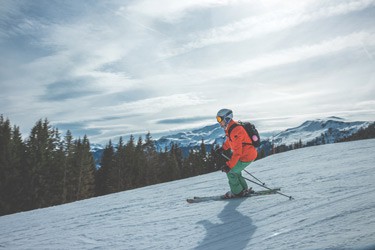
If you are a snowboarder or skiing fanatic, you know that injuries come with the territory. If you aren’t careful, you could end up with torn ligaments, sprained muscles, or broken bones.
Statistics tell us that less than 4 injuries happen for every 1,000 days of skiing or snowboarding.
Sometimes these injuries are minor and only will require home care. Other times, they can be serious, requiring you to seek medical help. This guide will help you to understand the most common snowboarding and skiing injuries.
The Acromioclavicular Joint is often called the “AC joint” for short (pronounced ack-roe-my-oh-clah-vick-you-lar). This is basically a separation of the two bones that form this joint where the clavicle (collar bone) attaches to the scapula (shoulder blade). There is a ligament that attaches these two bones known as the AC ligament. The bony process that protrudes forward from the upper scapula is the acromion (pronounced ack-rome-ee-on). When these two main bones are separated, it is often referred to as a shoulder separation injury.
If you injure your AC joint skiing or snowboarding, expect to have pain at the end of your collarbone. This pain will spread throughout the shoulder at first. Eventually, the initial pain will resolve and be followed by pain over the joint itself.
Swelling will occur, too and depending on the severity of the injury, there may be a visible deformity. This will be an obvious bump where the joint has been separated. Pain will worsen with movement of the shoulder, especially when the arm is raised to or above shoulder height.
Doctors will grade AC joint injuries from one to six (1 – 6) using the Rockwood Scale which identifies injuries by amount of damage incurred. This will be based on the space between the acromion and clavicle. Grade one is just a simple sprain of the AC joint, but Grades four, five, and six involve severe conditions, and most always result in shoulder surgery.
The clavicle (or collar bone) is the bone that runs along the front side of the shoulder region and connects near the breast bone (sternum). This is one of the most common broken bones, and it occurs as a result of falling on an outstretched arm. This is one of the most common types of fractures in sporting and outdoor activities.
The bone typically fractures in the middle third region and this type of injury is very painful. Symptoms of a broken clavicle include swelling and discoloration at the site, pain of the area, a deformity that can be seen or felt, and worsening pain when elevating the arm.
The Medial Collateral Ligament (MCL) is a ligament that connects the inner surface of the thigh bone (femur) to the shin bone (tibia). This ligament allows the knee to resist force that may be applied from the outer surface thus preventing the inner portion of the joint from stretching under stress.
There are two parts to the inner knee ligament, the deep inner section that hooks onto the cartilage meniscus and the joint margins and a superficial band that adheres from higher up on the femur to the tibia.
An injury to the MCL occurs after there is an impact injury to the outside surface of the knee when the knee is in the bent position. The MCL will become stretched and the impact force tears the fibers. The inside portion of this ligament is prone to become injured first and this often leads to the meniscus being damaged as well. Pain in the area may not be noticed immediately after the injury.
These injuries are graded on a one to three (1 – 3) scale. A grade one tear only has less than 10% of the fibers torn. A grade two is greater than 11% but does not necessarily result in a complete tear of the ligament. A grade three is a complete rupture of the ligament, however. With a grade one tear, there may be mild tender knee on the inner aspect of the knee, but typically no swelling occurs.
With a grade two tear, there will be more pain and tenderness and some swelling over the ligament. The pain of a grade three tear is often not as bad as a grade two but this injury results in a significantly more unstable, wobbly knee. Grade three tears most always result in knee surgery.
What Should the Athlete Do?
What will the Orthopedic Specialist Do?
The Medial Meniscus (MM) is prone to many more injuries that the Lateral Meniscus. This structure is connected to the Medial Collateral Ligament (MCL) and the joint capsule. The MM is less mobile, too. Any force impacts can severely injure this structure and cause permanent damage. Tearing of the MM often requires surgical intervention.
The symptoms of a MM tear include pain on the inner surface of the knee joint, swelling of the knee at any time during the 48 hours after the injury, inability to bend the knee fully, a clicking noise with bending, and ‘locking’ or ‘giving way’ of the knee. Many who have this type of injury are unable to bear weight on the knee.
There are several types of meniscal tears. These include the longitudinal tears (ones that occur along the length of the meniscus), radial tears (those tears that occur from the edge of the cartilage inward), bucket-handle tears (like a longitudinal but occur where a portion of the meniscus becomes detached from the tibia forming a flap), and degenerative changes (making the meniscus become frayed or jagged). Most meniscal tears result in knee surgery.
What Can the Athlete Do?
What will the Orthopedic Specialist Do?
The most common upper extremity injury when skiing is to the thumb. The thumb has two ligaments on each side at the metacarpophalangeal (pronounced met-ah-car-poe-fah-lanj-ee-ahl) or MCP joint. The inner ulnar collateral ligament (UCL) gets damaged when a fall occurs and the skier doesn’t release the ski pole from the hand.
The pole makes a bending type stress occur to the thumb. “Skier’s Thumb”, as it is commonly called, occurs when the UCL is torn after the thumb is placed in an extreme position.
What Can the Athlete Do?
What will an Orthopedic Specialist Do?
Snowboarding and skiing are dangerous sports and beginners often have a higher risk of falls. Sometimes these falls damage the wrist enough that the skier or snowboarder has to have a wrist surgery. These falls result in wrist fractures, where an outstretched hand attempts to break a fall.
As a result of this, there are scaphoid and “Colles” fractures that can occur and around 100,000 of these occur each year. The schaphoid is one of the small bones called the “Carpal” area that make up the wrist.
“Colles” is the name of this type of fracture where the radius bone is injured. Signs of a fracture to this area include swelling of the wrist, pain with movement, and a visible deformity or bump. There is often tenderness in the region where the thumb and wrist connect.
What Can the Athlete Do?
What will the Orthopedic Specialist Do?
Twisting and turning down the slope can put a bit of a strain on your ankles and knees. Ankles get sprained when they are extended past the point they should be. Knees are devised to only bend in one direction and they are easily sprained when forced in an unnatural position.
Sprains are common among those who engage in sporting activities like skateboarding, snowboarding, and skiing and usually are nothing serious. If you suffer a sprain, you can expect pain, swelling, bruising, and a decrease in range of motion of the knee or ankle.
The main formula for treating sprains is R.I.C.E. This stands for Rest, Ice, Compress, and Elevate.
Everybody has heard of Jack Frost. He’s that happy cold-weather fellow who likes to nip at your fingers, nose, and toes. If you feel that ‘pins and needles’ feeling, that’s your sign to get to a warm area. When frostbite occurs, your skin will be bright pink and then turn red and swollen at first. Serious frostbite makes the areas turn bluish-gray.
When hypothermia occurs, you will shiver and your heart beat and breathing will speed up as your body temperature goes down. You may feel clumsy, confused, and feel really sleepy. Both of these conditions are serious and you should seek medical help if they occur.
If your fingers, nose, or toes are turning bluish-gray, red, or dark pink from frostbite, get help immediately. Don’t use the frostbitten part of your body and don’t rub the skin. Warm up the area with warm water (not hot) and avoid heating lamps or campfires. Cover the chilled area if possible, and put your hands or fingers in your armpits for warmth. Remove any wet clothing and get to a warm place.
The sun’s rays are the hottest from 10 am to 4 pm. If you are out during this time, you are more likely to burn. If you do get sunburned, expect discomfort and pain, redness, swelling, and even blistering. A minor burn will make the skin be tender to touch. A more serious burn will involve blistering. If you have lots of blistering on your body, you will need to seek help immediately.
The main objective is to cool down the skin and limit the extent and discomfort of the burn. Take a shower with cool water or use aloe vera cooling gel on your skin. Drink plenty of fluids, too. Sunburns are dehydrating as they draw water from the body. If your skin is burned, you will need to stay out of the sun for a couple of days to let it heal.
It is easier to prevent than to treat, so take this advice seriously and do what you can in the way of prevention. Here are some handy tips:
According to the United States Consumer Product Safety Commission, more than 440,000 people were treated in 2010 for winter sports-related injuries. These injuries were related to snow skiing, snowboarding, sledding, tobogganing, and ice skating.
Injuries that are associated with winter sports include sprains, strains, fractures, and dislocations. Most of these injuries are easily prevented if sports participants adequately prepare by keeping in good physical condition, stopping when they are in pain or fatigued, or by staying alert.
Knee injuries that occur include tears to the anterior cruciate ligament and the meniscus. Also, head injuries are common serious winter sports injuries.
There are several things you can do to prevent injury during your favorite winter activities.