Reduce Your Chances for Injury While on the Football Field

Week four of the Seattle Seahawks football season has taken a few hits. Eight players are on this week’s injury list. It’s a reminder to both professional and non-professional athletes that playing smart is the best way to reduce your chances of injury in this contact sport.

The 8 Most Common Football Injuries:Football Helmets

Not including head injuries, the most common musculoskeletal injuries include:

1) ACL injuries – The anterior cruciate ligament in the knee can become damaged or torn when a player is impacted from the front or rear.
2) MCL injuries – Injury to the medial collateral ligament in the knee is also very common because it occurs when the knee is impacted from the side.
3) Torn meniscus – When a player rotates their body while a foot stays planted, the knee can twist, causing the meniscus to tear.
4) Ankle sprains and strains – Perhaps the most common injury in all sports, ankles are susceptible to soft tissue damage when pivoting, changing direction, or putting too much pressure on the joint.
5) Muscle contusions – A strong impact to a large muscle, usually in the thigh, can cause a contusion. This is basically a large, deep bruise that can impair muscle function.
6) Torn hamstrings – Bursts of speed can cause the hamstrings to tear if the player is not conditioned or properly warmed up.
7) Shoulder tendinitis – Frequent throwing can cause overuse injuries like shoulder tendinitis from repetitive motions.
8) Shoulder separation or dislocation – A direct blow below the shoulder can cause a separation of the acromioclavicular joint, while a dislocation occurs when the head of the humerus detaches from the scapula.

The treatment protocol for these football injuries varies and can range from basic RICE (rest, ice, compression, elevation) to surgery, with several options in between. For all of these injuries, RICE can be improved with active cold and compression therapies to help speed up the healing process for injuries. Cold compression therapy can also be used after surgery to help speed up the recovery process.

According to Dr. Peterson, “While injuries are an unavoidable consequence of contact sports, indeed any sport, the risk of injury can be dramatically lowered by proper background training and techniques. Additionally, proper conditioning can speed recovery times after injury reduce the chance of recurrent injury.”

Here are some helpful tips on how you can reduce your chances of a football injury:

-Have a pre-season health and wellness evaluation
-Perform proper warm-up and cool-down routines
-Consistently incorporate strength training and stretching
-Hydrate adequately to maintain health and minimize cramps
-Stay active during summer break to prepare for return to sports in the fall
-Wear properly fitted protective equipment, such as a helmet, pads, and mouthguard
-Tackle with the head up and do not lead with the helmet
-Speak to a sports medicine professional at OSS if you have any concerns about football injuries or football injury prevention strategies

If you believe you are suffering from a sports-related injury and need specialized orthopedic care, the orthopedic surgeons at OSS provide excellent treatment options for your injury. Please feel free to contact OSS at (206) 633-8100 to schedule an appointment.
Ulnar Wrist Pain in Tennis – Tips to Help Prevent Injury

The 2014 US Open Tennis tournament was filled with ups and downs this year. Mirin Cilic beat out some top seeded players to win the men’s championship and the favorite on the women’s side, Serena Williams won the title. Years of training, wins and losses have been part of any tennis player’s repertoire, so have injuries.

Ulnar Wrist

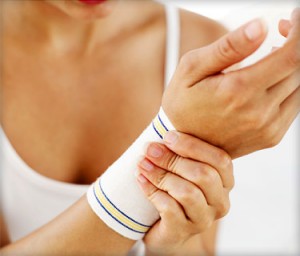
Wrist injuries are common for tennis players and elite professionals. The anatomic location of the wrist and its major role in the kinetic chain needed in stroke production, it is unfortunately a common site of pain and disability. Often, the pain presents on the pinkie-side, or ulnar side, of the wrist.

Many players experience this ulnar pain in the non-dominant hand during two-handed backhand strokes. In this stroke, the top hand is placed in extreme ulnar deviation and extension, while dynamically moving from supination to pronation. This same motion-type occurs in many tennis strokes, and as such can lead to acute and chronic ulnar wrist injuries.

Tennis players can present with an acute event of sudden onset – either after a violent fall with the wrist in extension and pronation/supination, or after hitting the tennis ball and having an immediate feeling of ulnar wrist pain. According to Dr. Weil, “Ulnar sided wrist pain in tennis players can often be due to tendinitis and can be treated in a conservative fashion. Sometimes degeneration of the cartilage of the wrist can occur.

If you are experiencing pain for more than a few days while playing tennis an evaluation by an orthopedic surgeon is recommended.” When the presentation of pain is chronic and insidious, the ulnar wrist pain arises over the course of days or weeks, and the athlete usually cannot recall a single inciting injury.

Wrist injuries in tennis players often result from over-use, improper technique, and even using the wrong equipment. Also, excessive wrist motion during the stroke will predispose a player to injury. Some things to consider to help prevent ulnar wrist pain:

  • Equipment: Using the wrong grip size, wrong strings, and improper string tension can all lead to wrist pain. The grip size can determine the amount of force needed to hold the racket through the stroke, leading to increased firmness of grip and potential injury. Too firm a grip can restrict free movement of the arm. The grip should be only as firm as necessary to ensure proper stroke technique.
  • Grip: Extreme grips like a Western will compromise the position of the wrist, forearm, and elbow which places additional stress on the adjacent muscles and tendons. For the two-handed backhand player, use of the continental grip on the bottom hand and the Eastern forehand grip on the top hand is preferable. Players using extreme grips (Western) place their wrist and forearm in positions that place additional stress on the muscles, tendons, and ligaments and can predispose them to injury. Additionally, another breakdown in technique is when the player uses the wrist and hand as primary force generators during ball strike. The wrist and hand must be viewed as links in the kinetic chain whereby large forces generated from the ground, lower extremity, and trunk are transferred.
  • Position of wrist at ball strike: In the two handed back-hand, the tendency for some players is to place the top hand in extreme extension and ulnar deviation prior to ball strike. The thought is to power the ball into creating topspin at contact. By using the Eastern Forehand grip in the top hand (left hand in right handed players) and by incorporating the players’ core and lower body/legs into the stroke properly, the lower body/core can load the energy and transfer load and energy up the kinetic chain into the arm and wrist to abate some of the torsional stress on the wrist.
  • Physical: Due to the physical demands of tennis and all of the repetition that is involved, tennis play causes the dominant playing side to over-develop which leads to overall body muscle imbalance. Exercises that strengthen the wrist, forearm and elbow include wrist curls, radial and ulnar deviation resistance maneuvers, and ball dribble off the floor then wall to improve both strength and endurance.

Helpful tips to prevent wrist injury:

1) Choose your equipment carefully, take into account level of play and age.

2) Be sure to use proper grip and technical skills, and be open to reviewing these periodically, even using video, making note of changes in swing mechanics pre and post ball strike.

3) Have a daily routine to include strength and flexibility exercises that increase stamina and maintain range of motion; this should include the hands, wrists, forearms, elbows, and shoulders.

4) Have elastic bands in your bag to allow you to perform strength exercises anytime and have them easily accessible; also, you should be able to perform this routine away from the supervision of coaches, trainers, and parents.

5) Perform strengthening exercises after practice or match play or on “off” days where not hitting is done to avoid muscle fatigue during play.

If you believe you are suffering from a tennis-related injury and need specialized orthopedic care, Orthopedic Specialists of Seattle provide excellent treatment options available for you. Please feel free to contact OSS at (206) 633-8100 to schedule an appointment.

Backpack Safety for Back to School

backpackIt’s back to school season it’s time to clean out those backpacks to make room for the new school year! 
Sure, you may have some items that should have been thrown out from the previous school year, but now, you need to make room for those new books and supplies to get you through the next school year.

Did you know that according to the Consumer Product Safety Commission, injuries from heavy backpacks result in more than 7,000 emergency room visits per year? Sprains, strains, and “overuse” injuries were among the top complaints.

Safety Tips

OSS would like to offer some basic safety tips for you:

  • Your backpack should weigh only 15% – 20% of your total weight
  • Backpack straps should be wide and padded
  • Make sure the backpack has two shoulder straps
  • The backpack should have a padded back
  • Adjust the bottom of a full backpack and make sure it is not more than four inches below your waistline.
  • Consider using a rolling backpack, an air backpack or a light-weight backpack
  • Periodically check the contents and weight of your backpack; you may be amazed at the amount of unneeded items you are carrying

Prevent injury when using a backpack, do the following:

  • Use both shoulder straps to keep the weight of the backpack better distributed
  • Tighten the straps to keep the load closer to the back
  • Organize items and pack heavier things low and towards the center
  • Remove items if the backpack is too heavy and only carry items necessary for the day
  • Lift properly by bending at the knees when picking up a backpack

Here’s a great tip from Dr. Shapiro, “Take the time to lift your kids backpack. What could they leave behind to lighten their heavy load?”

If you believe you are suffering from a backpack-related injury and need specialized orthopedic care, Orthopedic Specialists of Seattle provide excellent treatment options available for you.  Please feel free to contact OSS at (206) 633-8100 to schedule an appointment.

Operative Treatment for Clavicle Fractures (Broken Collarbone)

Operative Treatment for Clavicle Fractures (Broken Collarbone)

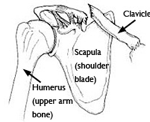
Clavicle fractures are often caused by a direct blow to the shoulder. In sports, it usually occurs when an athlete is tackled in a football game, falls of a bicycle, or gets body-checked into the plexi-glass of an ice rink. It can also happen during a fall onto the shoulder or a car collision, a fall onto an outstretched arm, or in childbirth, when the baby is passing through the birth canal.

The clavicle is a long bone and most breaks occur in the middle of it. Occasionally, the bone will break where it attaches at the ribcage or shoulder blade.

Clavicle_OSS

Symptoms

Clavicle fractures can be very painful and may make it hard to move your arm.

Additional symptoms include:

  • Sagging shoulder (down and forward)
  • Inability to lift the arm because of pain
  • A grinding sensation if an attempt is made to raise the arm
  • A deformity or “bump” over the break
  • Bruising, swelling, and/or tenderness over the collarbone

Evaluation by an OSS physician

In order to pinpoint the location and severity of the break, your OSS physician will order an x-ray. X-rays of the entire shoulder will often be done to check for additional injuries. If other bones are broken, your doctor may order a computed tomography (CT or CAT) scan to see the fractures in better detail.

If your bones are out of place (displaced), your OSS physician may recommend surgery. Surgery can align the bones exactly and hold them in good position while they heal. This can improve shoulder strength when you have recovered, if displacement is significant. A recent large study showed improvement in function with operative repair when the fracture is significantly displaced.

The use of Plates and Screws

During this operation, the bone fragments are first repositioned into their normal alignment, and then held in place with special screws and/or by attaching metal plates to the outer surface of the bone. Newer locking plates are contoured to give significant strength while minimizing the prominence of the plate. Many patients notice immediate improvement in the disturbing bone movement right after surgery.

After surgery, you may notice a small patch of numb skin below the incision. This numbness will become less noticeable with time. Because there is not a lot of fat over the collarbone, you may be able to feel the plate through your skin. It is important to start full range of motion soon after surgery.

Plates and screws are sometimes removed after the bone has healed, but that is up to the patient’s discretion. This is a much smaller procedure with little down time, usually 4-6 months after the original surgery.

img2

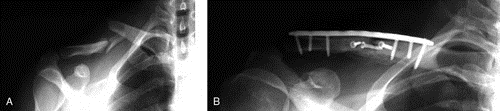
(A) The clavicle is broken in more than one place and the fragments are severely out of alignment. (B)The fractured pieces are held in place by a combination of plates and screws.


Rehabilitation

Specific exercises will help restore movement and strengthen your shoulder. Your OSS physician may provide you with a home therapy plan or suggest that you work with a physical therapist.

Therapy programs typically start with gentle motion exercises. Your OSS physician will gradually add strengthening exercises to your program as your fracture heals.

Although it is a slow process, following your physical therapy plan is an important factor in returning to all the activities you enjoy.

Surgical Complications

People who use nicotine, have diabetes, or are elderly are at a higher risk for complications during and after surgery. They are also more likely to have problems with wound and bone healing. Be sure to talk with your OSS physician about the risks and benefits of surgery for your clavicle fracture.

There are risks associated with any surgery, including:

  • Infection
  • Bleeding
  • Pain
  • Blood clots in your leg
  • Damage to blood vessels or nerves
  • Nausea

The risks specific to surgery for collarbone fractures include:

  • Difficulty with bone healing
  • Injury to surrounding vessels/organs (rare)
  • Hardware irritation

Outcome

Whether your treatment involves surgery or non-surgical treatment, it can take several months for your collarbone to heal. It may take longer in diabetics or people who nicotine.

Most people return to regular activities within 3 months of their injury. Your OSS physician will tell you when your injury is stable enough to do so. Returning to regular activities or lifting with your arm before your doctor advises may cause your fracture fragments to move or your hardware to break. This may require you to start your treatment from the beginning.

Once your fracture has completely healed, you can safely return to sports and daily activities.

What to discuss with your OSS Surgeon

  1. When will I be able to start using my arm?
  2. When can I return to work?
  3. Do I have any specific risks for not doing well?
  4. If I have surgery, what are the risks and benefits and how long will I be in the hospital?
  5. If I do not have surgery what are the risks and benefits?
  6. Is my bone weak?
  7. Should I be taking calcium and Vitamin D?

If you would like more information about clavicle surgery, call Orthopedic Specialists of Seattle (206) 633-8100 to schedule an appointment with an OSS surgeon.

Common Swimming Injury – Swimmer’s Shoulder

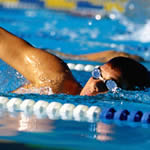
Swimmers shoulderSwimming is a sport in which there is a great diversity among participants. There are both recreational and competitive swimmers, ranging in age from preschool through college.

Although the lack of impact in swimming makes it a perfect choice for avoiding lower-body injuries, the intense involvement of upper-body muscles makes overuse injuries a real possibility.

The most common swimming-related injury is swimmer’s shoulder, shoulder pain usually caused by rotator cuff tendonitis. Many cases of swimmer’s shoulder can be successfully treated through physical therapy.

For competitive athletes, rotator cuff surgery may be recommended if shoulder pain continues after 6 months of guided rest and rehabilitation.

Signs and Symptoms of Swimmer’s Shoulder

  • Shoulder pain while swimming freestyle
  • A forward shoulder slouch while seated
  • Underdeveloped posterior shoulder musculature
  • A mild winging on the affected side’s left scapula
  • Tenderness in the acromioclavicular joint and coracoid process in the impingement area
  • Tenderness in the affected side’s bicep tendon and supraspinatus tendon
  • A full range of motion in all planes
  • Strength is slightly decreased in the supraspinatus and infraspinatus
  • Full strength in the internal rotators, arm extensors, and flexors
  • Moderate posterior and anterior laxity in both shoulders
  • A bilateral sulcus sign
  • Impingement and adduction-compression tests on the affected side were positive
  • An apprehension test on the affected side was negative

Swimming Safety and Injury Prevention

According to Dr. Franklin, “Proper warm up, stretching, technique and conditioning are crucial in preventing tendonitis and overuse injuries in swimmers.”

  • Learning proper technique goes a long way toward preventing injuries; if you’re just starting out, schedule some sessions with a swimming coach.
  • Remember to warm up and stretch before every swim, giving particular attention to your shoulders.
  • A strength-training program can help build up the muscles around the shoulder and upper back; ask a physical therapist or personal trainer if you need help creating a routine.

If you believe you are suffering from swimmer’s shoulder or swimming-related injury and need specialized orthopedic care, the orthopedic surgeons at OSS provide excellent treatment options for your injury. Please feel free to contact OSS at (206) 633-8100 to schedule an appointment.