
If you participate in physical fitness activities and sports, you are at risk for injuries to the soft tissues of your body. Damage to the tendons, ligaments, and muscles of the body can occur even during simple everyday activities. These types of injuries include sprains, strains, contusions, stress injuries, bursitis, and tendonitis. Soft tissue trauma is usually the result of a fall, a blow to the body, or a sudden twist. Many times injuries to the soft tissue of the body are obtained because of repeated overuse during athletic activities.
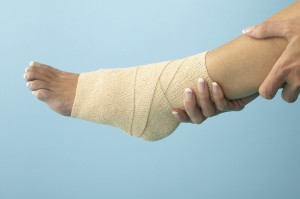
Common Orthopedic Foot Problems
Achilles Tendinits
Achilles tendinitis is a commonly occurring foot condition that leads to pain along the back of the leg near the heel. The Achilles tendon is the largest tendon in the body, and it connects the calf muscles to the heel bone. This tendon is used for jumping and running.
There are two types of Achilles tendinitis: noninsertional and insertional types. With noninsertional Achilles tendinitis, the fibers in the middle portion of the tendon have started to break down and the tiny tears swell and thicken the tendon. This more commonly affects young, active individuals.
With insertional Achilles tendinitis, the lower portion of the heel where the tendon attaches to the heel bone is affected. This particular type can occur for any type of patient, active or inactive.
What are the symptoms of Achilles tendinitis?
Like most foot problems, the symptoms vary from person to person. These include:
- Pain along the tendon or the back of the heel that worsens with activity
- Pain and stiffness which is worse in the morning
- Severe pain the day after exercising
- Thickening of the tendon
- Swelling that is present all the time or worsens after activity
- Bone spurring
What causes Achilles tendinitis?
Achilles tendinitis is not the result of a specific injury; the problem results from repetitive stress on the tendon. Other factors that cause this syndrome include tight calf muscles and bone spurring.
How is Achilles tendinitis treated?
Nonsurgical treatment for Achilles tendinitis involves rest, ice therapy, NSAIDS, special exercises, physical therapy, and supportive shoes and orthotics. Surgical treatment may be necessary if conservative measures fail. Occasionally a gastrocnemius recession is performed, where the calf muscles are lengthened. Surgery typically involves debridement and repair of the affected tendon.
The aim of this procedure is to remove the damaged portion of the Achilles tendon. Occasionally a tendon transfer is required when a significant amount of damaged tendon is present. The unhealthy portion of the tendon is removed and reinforced with a graft to prevent the remaining tendon from rupturing with activity.
Adult Acquired Flatfoot Deformity (AAFD)
There are many different conditions that can lead to adult acquired flatfoot deformity. This syndrome results in a fallen arch with the foot pointed outward. For this condition, most people require orthotics and braces. For those who have no relief with these measures, surgery may be an option. Your orthopedic specialist will plan a treatment regimen for you based on what is causing your AAFD.
What are the symptoms of AAFD?
The symptoms of AAFD vary from patient to patient. They include:
- Pain that is worse with activity
- Pain along the course of the posterior tibial tendon which is on the inside of the foot and ankle
- Pressure or discomfort on the outside of the ankle bone
- Bony bumps on the top and inside of the foot that make wearing shoes difficult
What causes AAFD?
The most common cause of AAFD is damage to the posterior tibial tendon. This structure is one of the most important tendons of the leg. It extends from a muscle in the calf and travels down the inside of the lower leg to attach to the bones on the inside of the foot. This tendon functions to hold up the arch and support the foot with walking. Other things that can cause AAFD include arthritis, injury, and diabetes collapse (Charcot foot).
Who develops AAFD?
Women and people over age 40 are most likely to develop AAFD. Other risk factors are hypertension, obesity, and diabetes.
How is AAFD treated?
When orthotics and braces do not work, surgical treatment for AAFD may be necessary. The type of surgery will depend on the degree of dysfunction. With stage 1 dysfunction (pain along the posterior tibial tendon with no loss of arch), surgery involves debridement of the tendon and repair of longitudinal tears.
The operation for stage 2 dysfunction (pain along the posterior tibial tendon with associated fallen arch deformity) is more complex and involves realignment of the heel bone, a tendon transfer to support the arch, and often a spring ligament repair. When the deformity is due to arthritis, surgery to fuse the bones of the hindfoot (triple arthrodesis) is often required.
Plantar Fasciitis
If you are experiencing pain on the bottom of your heel, you may have plantar fasciitis. This condition occurs when the strong band of tissue that supports the foot arch becomes inflamed and irritated. The plantar fascia is a thin, long ligament that lies just beneath the skin on the bottom of the foot. This ligament connects to the heel in the front aspect of the foot to support the arch.
What are the symptoms of plantar fasciitis?
Common symptoms of plantar fasciitis include:
- Pain after the first few steps when arising in the morning or after a long rest period
- Pain on the bottom of the foot or heel area
- More intense pain after (not during) activity or exercise
What causes plantar fasciitis?
The plantar fascia absorbs the high strains and stresses placed on the feet. Sometimes, however, there is too much pressure and damage or tears to the tissues of the foot occurs. When this happens, the body’s natural response to injury is inflammation resulting in heel pain and stiffness of the plantar fascia.
How is plantar fasciitis treated?
Nonsurgical treatment of plantar fasciitis involves rest, ice therapy, NSAIDS, exercise (calf stretch and plantar fascia stretch), cortisone injections, supportive shoes and orthotics, night splints, and physical therapy. Your orthopedic specialist will recommend what is best for you. If all these measures fail, occasionally shockwave therapy is an option. Surgery is rarely
Reverse Shoulder Replacement
Shoulder joint replacement is an excellent way to relieve pain in cases of severe arthritis of the shoulder, and sometimes for fractures or other conditions.
Nonsurgical treatments like medications and activity modification should always be tried before surgery. However, if these either fail to work, or stop working for you, you may be a candidate for shoulder joint replacement surgery.
“Traditional” shoulder replacement involves resurfacing the normal humerus “ball” with an alloy metal ball, and the cup on the shoulder blade with a plastic one (sometimes with a metal pin on the back, helping to hold the cup in place long-term):
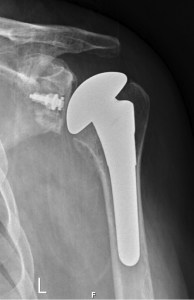
About 53,000 people in the U.S. have shoulder replacement surgery each year, far fewer than the over-800,000 knee and hip replacements performed annually.
There are some patients with arthritis who cannot have successful traditional shoulder replacement surgery. These include patients with severe, irreparable rotator cuff tendon tears, some fractures, and tumors. For them, “Reverse Shoulder Replacement” might prove a good alternative.
Reverse shoulder replacement involves the opposite: replacing the ball with a cup, and the cup with a ball. This rather odd-sounding combination allows patients to control the motion of the shoulder by substituting the deltoid muscle for the deficient rotator cuff muscles:
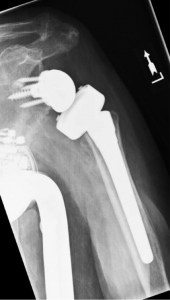
One of OSS Shoulder Specialists has extensive training and experience in both traditional and reverse shoulder replacement, and has worked with the designers of the prosthesis he uses for implantation. He would be happy to see you in clinic and evaluate whether you would be a good candidate for this procedure.
Rheumatoid Reconstruction of the Hand
Reconstructive hand surgery corrects many different functional and cosmetic conditions. Rheumatoid reconstruction of the hand can repair joint deformities caused by rheumatoid arthritis. These procedures help relieve the pressure and pain and cosmetic deformities associated with this common hand disorder.
Typical hand difficulties associated with Rheumatoid arthritis include nerve compression/numbness leading to carpal tunnel syndrome, severe arthritis and deformity, tendon rupture and swelling, and cosmetic deformities of the fingers that affect function.
What is rheumatoid arthritis of the hand?
Rheumatoid arthritis is considered a systemic disease, as it can affect many different areas of the body. The joints and soft tissues become inflamed, swell, and do not function smoothly. Around two thirds of people with rheumatoid arthritis have hand and wrist problems.
With this chronic form of arthritis, the cells that lubricate and line the joints are affected. The joint cartilage and bones erode and the ligaments and tendons stretch out, making the hand and wrist look deformed. There are many classic features of hand rheumatoid arthritis. These include firm nodules along the fingers, angulation or collapse of the fingers, soft lumps on the back of the hand that moves as the fingers straighten, and deformities of the fingers.
What are the different surgical options?
There are many non-surgical and surgical options involved with rheumatoid reconstruction of the hand. Many of the decisions require complex decision making about ultimately what will benefit the patient most. Fortunately, there are many newer medications that have reduced the need for advanced surgery in most patients. However, some patients continue to worsen in pain, function and cosmetics to still require traditional operative treatments.
Typical surgeries include Tendon Repairs and Reconstructions, Joint repairs/fusions or joint replacements, nerve releases, and removal of inflamed tissues.
When is joint replacement surgery the best surgical option?
A joint replacement procedure of the wrist, or fingers is an innovative option for treating arthritis of the hand in in well-selected patients with rheumatoid arthritis. Joint replacement surgery can provide increased finger and wrist, range of motion, improve hand function, and most importantly, pain relief. This surgery involves replacing a worn out joint with an artificial one. The new joint is most often composed of silicone rubber, metal and plastic or the patient’s own tissue, which pads the worn out bone ends.
Hand Tumors and Cysts
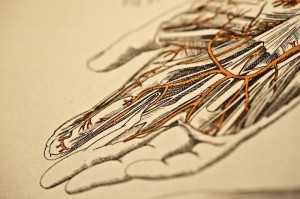 We see many patients who have lumps and bumps in their hand that are painful, growing, affect function, and are often worry some for the patient due to the concern for cancer. If you are concerned about a hand tumor, wrist mass, or finger cyst, you should schedule a consultation to put your mind at ease with a diagnosis and to discuss treatments available. … read more