Proper Stretching to Avoid Injuries

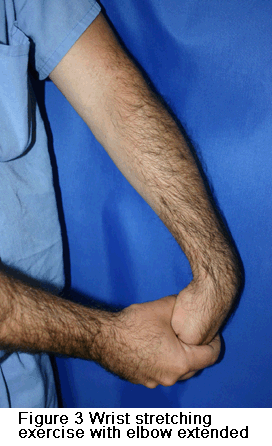
How you stretch, why you stretch, and when you stretch are the keys to making stretching work for you. Stretching before physical activity improves flexibility, enhances athletic performance, and decreases the risk of activity-based injuries.

The more flexible you are when you exercise the more protected you are against injury by helping your joints move through their full range of motion. If a tendon is not stretched out, you could increase your risk of tendinopathy or tendinitis. When you adequately stretch out your muscles, tendons, and ligaments, you decrease the risk of microtrauma to your body’s structures and avoid overload and injury. … read more

Knee Arthroscopy

What is knee arthroscopy?

During the last two decades, the diagnosis and treatment of knee joint problems have improved thanks to a minimally invasive procedure called knee arthroscopy. This surgical technique allows orthopedic specialists to see inside the knee and to carry out diagnostic and treatment measures through tiny incisions. This approach to surgery reduces pain, minimizes scarring, and helps speed up the recovery period when compared to traditional “open” knee surgery.

How does arthroscopy of the knee work?

Arthroscopy involves the orthopedic surgeon to using a device known as an arthroscope. This instrument is a tiny, pen-shaped device that has a small video camera attached to the end. The arthroscope is inserted into the knee through small incisions and the camera relays images to a computer screen. Our orthopedic specialists can use these images to diagnose knee problems. Once that is done, the doctor can carry out the appropriate procedure in the same surgical setting.

What does knee arthroscopic surgery treat?

Orthopedic specialists can use arthroscopic surgery to perform a variety of procedures. These include the repair or reconstruction of torn ligaments, the removal of small loose bits of bone. The hard tissue that provides structural support to the body. It is primarily composed of hydroxyapatite cryst… or cartilagecartilageThe hard, thin layer of white glossy tissue that covers the end of bone at a joint. This tissue allows motion, and repair or resection of torn meniscus tissue. Many of these conditions arise due to a knee injury or degeneration.

What are the benefits of arthroscopic surgery of the knee?

There are many benefits of knee arthroscopy when compared to traditional “open” surgery. With this procedure, you likely to experience less pain after the surgery and you have a lower risk of developing certain complications like infections or scarring. In addition, the hospital stay is shorter as most knee arthroscopic surgeries are performed on an outpatient basis in a freestanding surgery center. The greatest benefit is usually a quicker overall recovery.

What are the risks of knee arthroscopy?

All medical and surgical procedures have some risk. With knee arthroscopy, the risks are minimal and our orthopedic specialist will discuss these with you prior to your surgery. These risks depend on your current state of health, the type of surgery performed, and the extent of your injury or knee problem.

What should I expect before surgery?

Prior to an arthroscopic procedure, depending on your overall health you might have to see a primary care health professional for a general physical examination. In addition, you will need to tell the doctor about any medications you are taking and he may advise you to stop some of these before the procedure.

What should I expect after surgery?

You will need to start exercising the knee immediately after your procedure to restore range of motion and strength to the joint. While many patients get back to normal activities without much difficulty, plan to discuss this issue with your orthopedic specialist, as he may have a specific rehabilitation program for you to follow.

Immediately after your knee arthroscopy you will experience some swelling and discomfort of the knee. This will usually only last for a few days, however. Your doctor will prescribe specific medications that work to alleviate these symptoms and help you get back on your feet.

Also, you should expect to feel a little stiff when performing exercises early after surgery. Any activity that leads to significant discomfort should be stopped immediately and your orthopedic specialist should be notified. Our orthopedic surgeons request that you elevate your leg frequently and use ice to reduce swelling.

Common Wrist Fractures and Repair

I see many wrist fractures, these are among the most common along with symptoms and treatment.

Distal Radius Fracture

The most commonly broken wrist bone with a fall on an outstretched hand is a break of the distal radius. The radius is the larger of the two forearm bones and the end toward the wrist is called the distal end. When the area of the radius near the wrist breaks it is considered to be a fracture of the distal radius. Distal radius fractures are very common.

Symptoms of a distal radius fracture are immediate pain, bruising, swelling, and tenderness. Often times the wrist hangs in an odd or bent way, otherwise known as a deformity.

What are the risk factors for a distal radius fracture?
Osteoporosis is a risk factor for all types of fractures, especially a distal radius fracture. A broken wrist can happen in healthy bones as well. The majority of these types of fractures occur in people older than 60 years of age who fall from a standing position. The other subset of people who injure their wrist are young patients with a high impact fall, causing a break in an otherwise normal wrist.

How is a distal radius fracture treated without surgery?
Treatment for a distal radius fracture involves the nature of the fracture, the age and activity level of the person injured, and the orthopedic specialist’s personal preferences. The doctor can cast the broken bone if it is in good position and is stable. Sometimes the orthopedic specialist must straighten the bone (reduce it) before a cast is applied. This is what doctor’s call a closed reduction. The cast is usually worn for about 6 weeks and at that time the doctor could order physical therapy to help with rehabilitation.

What is involved in surgical treatment?
There are times when distal radius fractures result in the bone being so much out of place that it cannot be corrected without surgery. The orthopedic surgeon will make an incision to directly access the broken bones to improve alignment. The bone can be held in correct position with the use of a plate and screws, metal pins, an external fixator or any combination of techniques.

Scaphoid Fracture of the Wrist

The scaphoid bone is one of the small bones in the wrist, and it is the wrist bone that is most likely to break. It is located on the thumb side of the wrist in the area where the wrist bends. It can be easily located when the thumb is held in a “hitch-hiking” position. The scaphoid bone is at the base of the hollow made by the thumb tendons.

Symptoms it is fractured include pain, swelling, and tenderness at the base of the thumb. The pain will worsen when the person grips something or tries to move the thumb or wrist. A scaphoid fracture is usually caused by a fall onto an outstretched hand and is not always as painful as one might think.

What are the risk factors for a scaphoid fracture?
Anyone can fracture their scaphoid bone but it is more common in athletes who participate in activities where falls are common. Men aged 20 to 30 are most likely to experience this type of injury.

How is a scaphoid fracture treated without surgery?
If the bone is in proper position and has good blood supply, the orthopedic specialist may treat it by casting. The cast is usually worn for 12 weeks. Many opt for surgical stabilization to minimize the length of immobility.

What is involved in surgical treatment?
Due to the precarious nature of the blood supply to the scaphoid, the orthopedic specialist may recommend surgery to optimize healing and prevent long term wrist arthritis. During the procedure metal implants (such as screws and wires) are used to hold the scaphoid in place until the bone is completely healed. The surgeon makes an incision over the front or the back of the wrist to align the bone, insert the metal implants, and repair the damage.

In special situations where the bone is not healing well on its own, a bone graft may be needed to aid in healing. A bone graft is new bone that is place around the broken bone to help stimulate bone healing. This allows the bone pieces to heal together into a solid bone.
Knee Replacement Surgery

Knee replacement surgery is also known as knee arthroplasty. This is a procedure that can help relieve pain of the knee and restore function of the knee joint. The knees develop osteoarthritis and other disorders that prevent them from bending appropriately.

During this knee surgery, the surgeon will remove damaged bone and cartilage from the thighbone, shinbone, kneecap, and surrounding areas and replace what is removed with an artificial prosthetic joint.

Today there are many good alternatives to the old crude hinges of yesteryear. You can have a metal alloy knee or one made with high-grade plastic and polymer. The surgeon performing knee replacement surgery in Seattle will decide which one is best for you based on your age, activity level, weight, and overall health.

What is arthritis?

Arthritis is means “inflammation of the joint.” Most people think of arthritis as the wearing away of joint cartilage. This causes severe inflammation and pain within the joint. When most of this cartilage is lost and the bone is exposed, we consider this osteoarthritis.

It is the “wear-and-tear” that occurs with age or athletic activities. Other types of arthritis are rheumatoid arthritis (a more severe type), gouty arthritis (more painful and less common), and lupus arthritis (uncommon).

What are the risks of knee replacement arthroplasty?

The risks of a knee replacement include: infection, knee stiffness, heart attack, stroke, nerve damage, or blood clots in the leg vein or lungs. Only around 2 percent of those undergoing this procedure will have serious complications, according to the American Association of Orthopedic Surgeons.

Who is a candidate for a knee replacement?

The most frequent reason for knee replacement surgery in Seattle is for the repair of joint damage caused by osteoarthritis and rheumatoid arthritis. You may be an applicant for knee replacement if:

You have disabling pain. Individuals who need knee replacement surgery commonly have problems walking, stooping, climbing stairs, and getting in and out of chairs. These people also experience moderate or severe knee pain at rest. Surgery may be an option in this case.

You have a knee deformity. Knee replacement surgery can be particularly helpful for people who have a knee that bows in or out or one that has lost function and shape from rheumatoid arthritis.

You’re 55 or older. Knee replacement is normally performed in older adults, but it may be considered for adults of any ages. Young physically active people are more likely to wear out their new knees prematurely, so doctors try not to replace young knee joints.

You have failed on other treatments. More conservative treatments are weight loss, physical therapy, a cane or other walker, medications, and braces. If these don’t help you, you may be a candidate for a knee replacement.

Your general health is good. Conditions such as restricted blood flow, cardiovascular disease, diabetes, serious lung disease, cancer, or infections can complicate surgery and recovery. The ideal candidate will not be in poor health.

What are the alternatives to knee replacement surgery?

Knee replacement is typically reserved for patients who have tried all of the other treatments and failed with them. Some of these individuals are still left with significant pain during normal activities, regardless of what medication or treatment they have taken.

Patients who only have occasional pain, are who are able to participate in athletic activities may not need a knee replacement. Others who have not tried non-operative treatments are probably not ready for a knee arthroplasty, either.

Non-operative treatment options include: arthrocentesis, arthroscopy, cortisone injections, Synavisc injections, physical therapy, heat therapy, massage therapy, cartilage transplantation, specialized knee braces, and arthrodesis with knee fusion, weight loss, and oral medications.

What are the Contraindications of knee arthroplasty?

There are a few reasons your doctor would not want you to undergo knee replacement surgery in Seattle. These include but are not limited to: knee sepsis, severe vascular disease, recurvatum deformity with muscle weakness, extensor mechanism dysfunction, a remote source of ongoing infection, and the presence of a well-functioning joint.

There are also relative contraindications where the medical condition doesn’t make the procedure safe or effective. These include: obesity, neuropathic joint, past history of osteomyelitis of the knee, and skin conditions that affect the knee (like psoriasis).

Remember, total knee replacement is an elective and life-enhancing surgery. It is not a life-saving surgery. The decision to undergo total knee surgery is one you must make once you are informed and well-educated on the alternatives, risks, and complications. It is important that you be aware of your options and be realistic with your expectations.

Ulnar Nerve Entrapment

master_74Description
Ulnar nerve entrapment occurs when one of the nerves in the arm (the ulnar nerve) becomes compressed and can’t function normally. This can give symptoms of “falling asleep” in the ring finger and little finger, especially when the elbow is bent. You may have aching pain on the inside of the elbow.

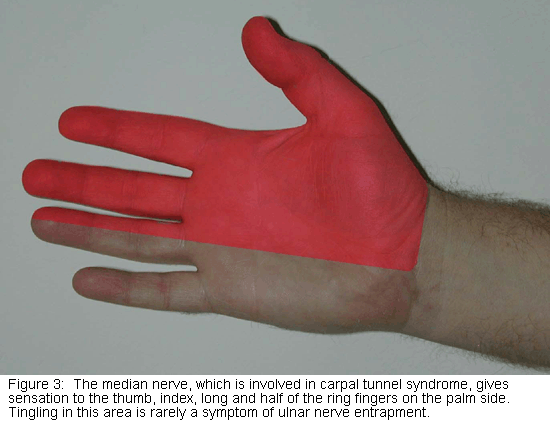
In some cases, you may have trouble moving the fingers in and out, or manipulating objects. Carpal tunnel syndrome has similar symptoms but involves a different nerve (the median nerve). Carpal tunnel syndrome typically causes tingling in the thumb, index finger and long finger.

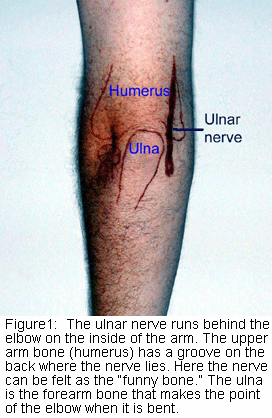
The ulnar nerve is one of the three main nerves in the arm. It travels from under the collarbone and along the inside of the upper arm. It passes through a tunnel (the cubital tunnel) behind the inside of the elbow. Here you can feel the nerve through the skin. It is commonly called the “funny bone.”

Beyond the elbow, the nerve travels under muscles on the inside of the arm, and into the hand on the pinky side of the palm. When the nerve goes into the hand, it travels through another tunnel (Guyon’s canal). The most common place where the nerve gets compressed is behind the elbow. Sometimes it gets compressed at the wrist, beneath the collarbone, or as it comes out of the spinal cord in the neck.

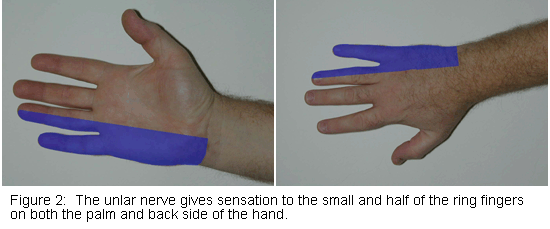
The nerve functions to give sensation to the little finger and the half of the ring finger that is near the little finger. It also controls most of the little muscles in the hand that help with fine movements, and some of the bigger muscles in the forearm that help to make a strong grip.

cons1_352_143
cons2_352_143

Risk Factors/Prevention
It is not known exactly what causes compression of the ulnar nerve. Some factors can make it more likely that the nerve will be compressed. These include prior fractures of the elbow, bone spurs, swelling of the elbow joint, or cysts. A direct blow to the inside of the elbow, leaning on the elbow for prolonged periods, or repetitive activity that requires a bent elbow can irritate the nerve if it is already compressed. If the ulnar nerve is compressed at the wrist, the cause is more likely to be a cyst in Guyon’s canal.

Symptoms
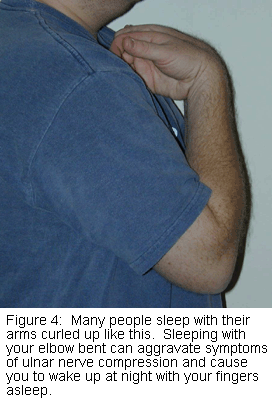
Numbness and tingling in the ring finger and little finger are common symptoms of ulnar nerve entrapment. Often these symptoms come and go. They happen more often when the elbow is bent, such as when you are driving or talking on the phone. Some people wake up at night because their fingers are numb. You may also have weakness of grip and difficulty with finger coordination (such as typing or playing an instrument). If the nerve is very compressed or has been compressed for a long time, muscle wasting in the hand can occur. Once this happens, muscle wasting cannot be reversed. For this reason, it is important to see the doctor as soon as you experience any of the symptoms.

Diagnosis
Always see an orthopaedist if you are having symptoms of ulnar nerve entrapment that interfere with normal activities or last more than a few weeks.
The doctor will examine the arm to check the nerve, and try to determine where the nerve is compressed. If the nerve is irritated, tapping over the nerve at the “funny bone” can cause a shock into the little finger and ring finger, although this can happen when the nerve is normal as well. The doctor will probably move the shoulder, elbow and wrist to see if any of these cause symptoms. The doctor will test the sensation in the fingers.

Although most causes of compression of the ulnar nerve cannot be seen on X-ray, the doctor may take an X-ray of the elbow or wrist to look for bone spurs, arthritis or other places that the bone may be compressing the nerve. If the doctor thinks that the nerve is compressed at the wrist, a CT scan (computed tomography) or MRI (magnetic resonance image) may be recommended to see if a cyst or other structure is the cause of the compression.

The doctor may recommend nerve conduction studies. These are special tests to determine how well the nerve is working and to help localize the area of compression. Nerves work like wires; when the nerve is not working well, it takes too long for the nerve to conduct. During this test, the nerve is stimulated in one place; the amount of time it takes for the response to be conducted to another place is determined. The area where the nerve conduction takes too long is likely to be the place where the nerve is compressed. Sometimes, a small needle is put into some of the muscles that the ulnar nerve controls. This can determine if there is any evidence of muscle wasting.

cons1_354_143Treatment Options
Unless you have a lot of muscle wasting, your doctor will probably recommend nonsurgical treatment initially. The following treatments may help to improve the symptoms. They may be all the treatment you need.

  • Avoid frequent use of the arm with the elbow bent. If you use a computer frequently, make sure that your chair is not too low. Do not rest the elbow on the armrest.
  • Avoid leaning on the elbow or putting pressure on the inside of the arm. For example, do not drive with the arm resting on the open window.
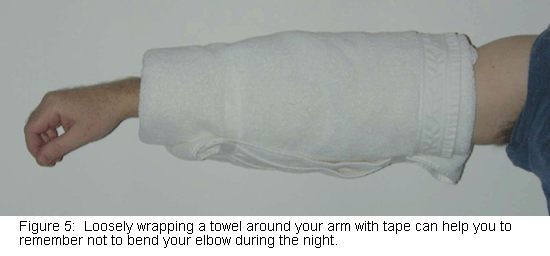
  • Keep the elbow straight at night when you are sleeping. This can be done by wrapping a towel around the straight elbow, wearing an elbow pad backwards, or using a special brace.

If symptoms are acute, the doctor may recommend that you take an anti-inflammatory medicine such as ibuprofen to help reduce swelling around the nerve. Steroid (cortisone) injections around the ulnar nerve are not generally used because there is a risk of damage to the nerve.

cons1_355_143

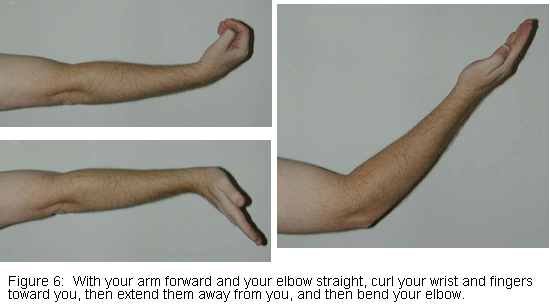
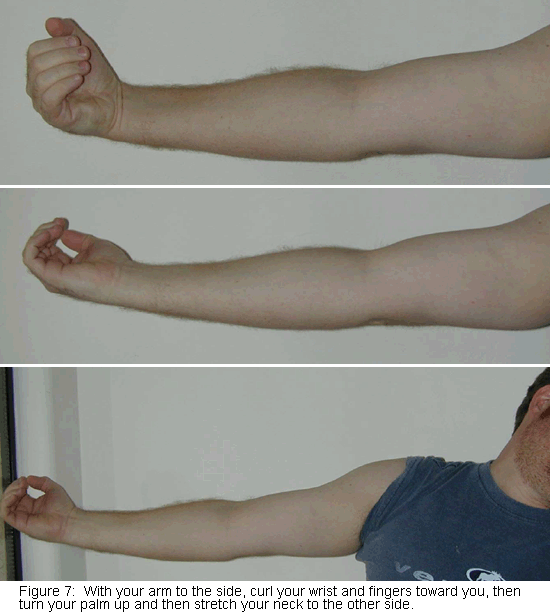
Some doctors think that exercises to help the nerve slide through the tunnels can improve the symptoms. These exercises can help keep the arm and wrist from getting stiff.

cons1_356_143
cons2_356_143

Treatment Options: Surgical
If you are not improving with the strategies listed above, if the nerve is very compressed, or if you have muscle wasting, the doctor may recommend surgery to take pressure off of the nerve. Most often, the surgery is done around the elbow, but it can be done at the wrist if that is the place of the compression. Sometimes, the nerve is compressed in both places, so surgery is done at both the elbow and the wrist.

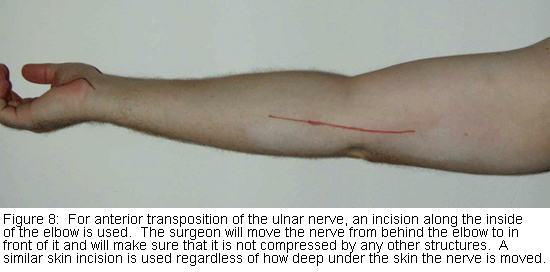
Surgeons use various ways to relieve compression from the nerve around the elbow. All of the operations involve making an incision around the elbow. In one operation, only the “roof” is taken off of the cubital tunnel. This tends to work best when the nerve compression is mild. More commonly, the nerve is moved from its place behind the elbow to a new place in front of the elbow. This is called an anterior transposition of the ulnar nerve. The nerve can be moved to lie under the skin and fat but on top of the muscle (subcutaneous transposition), within the muscle (intermuscular transposition) or under the muscle (submuscular transposition). There are many factors that go into deciding where the nerve is moved. The doctor will recommend the best option for you.

cons1_357_143

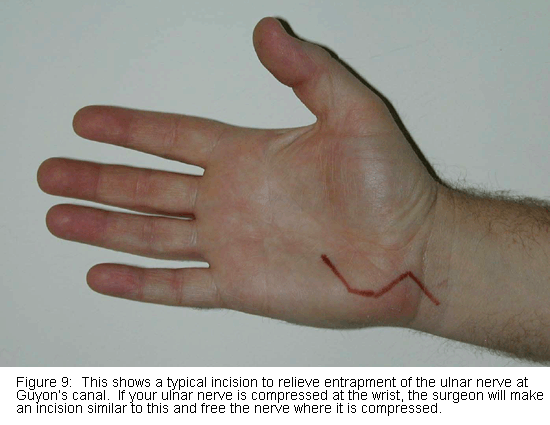
If the nerve is compressed at the wrist, a zigzag incision will be made at the base of the palm on the pinky side. The surgeon will open the roof of Guyon’s canal to take the pressure off the ulnar nerve. If there is a cyst or another reason for the compression, the surgeon will remove that at the same time.
The surgery is usually done on an outpatient basis or with an overnight stay in the hospital. Depending on the type of surgery, you may need to wear a splint for a few weeks after the operation. A submuscular transposition usually requires a longer time (3-6 weeks) in a splint. The surgeon may recommend physical therapy to help you regain strength and motion in the arm.

cons1_358_143

The results of the surgery are generally good. If the nerve is very badly compressed or if you have muscle wasting, the nerve may not be able to get back to normal and you may have some symptoms even after the surgery. Nerves recover slowly, and it can take a long time to know how well the nerve will do after the operation.