
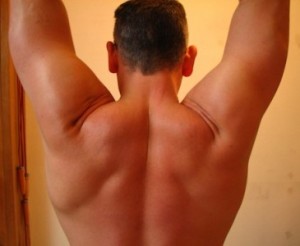
 Many Americans suffer rotator cuff tears and they are a common cause of pain and disability. When you tear your rotator cuff, you weaken your entire shoulder making daily activities more difficult. Just raising your hand up to comb your hair could cause serious pain. Read on to find out what makes up the rotator cuff, who is at risk for this type of injury, what are the symptoms of a tear, and how a rotator cuff is treated. … read more
Common Knee Problems

Almost everyone will have a minor knee problem during their lifetime. Our body movements don’t cause us problems most of the time, but some symptoms related to the knee can develop from every day wear-and-tear, injury, or simply from over use of the knee joint. These knee problems often happen during sporting activities or work-related tasks.
Some people are more likely than others to develop knee injuries andproblems. There are factors that increase your chances of having these issues such as certain jobs, sporting and recreation activities, getting older, or having a disease like arthritis or osteoporosis. Knee problems are the most common reason for visiting an orthopedic specialist’s office. … read more
Common Hand and Wrist Injuries
Colles Wrist Fracture
A Colles fracture is a break across the end of the radius, that main bone of the forearm. This type of injury causes the wrist to become shortened and extended. Other names for the Colles fracture are transverse wrist fracture or dinner-fork deformity. These types of fractures occur commonly when the arm is outstretched to break a fall. This injury is more likely to happen during skateboarding, rollerblading, running or some other sports activity in which a forward fall occurs while the person is moving at high speed.
Most of these types of fractures can be placed in a splint and an arm sling. Sometimes, a lightweight, fiberglass cast is necessary. If the bone is no longer in line and straight, the fracture may need to be ‘reduced’ or straightened by way of wrist surgery. The Orthopedic Specialist will use a local anesthesia before reducing this type of fracture.
In some cases, surgery is warranted. The break may need to be fixed with wrist surgery using a plate, screws, pins, or other metal hardware. Some surgeons can use plastic hardware, too.
What are the Symptoms of a Colles Fracture?
This type of fracture changes the shape and angle of the forearm in the area just above the wrist. The injured person will have pain and inability to hold objects. Most always, a Colles’ fracture causes swelling just above the wrist and the person is unable to lift with that hand.
What is the First Aid for a Colles Fracture?
- Place the wrist and hand in a splint in normal position.
- Place a rolled up sock in the palm and wrap the hand and wrist area with an elastic bandage.
- Use an ice pack to reduce swelling.
- Go to the emergency room or your Orthopedic Specialist’s office.
- Do NOT try to move or straighten the hand and wrist.
What Can the Orthopedic Specialist Do?
- Stabilize the fracture.
- Order X-Rays and other scanning tests.
- Reduce the fracture if necessary.
- Perform wrist surgery on the fracture if necessary.
- Prescribe a rehabilitation plan to prevent deformity.
Hand Fractures
The hand is made up of many small bones, and these bones work together as the supporting framework. A fracture occurs whenever there is enough force applied to one of the bones. When a fracture occurs, there is pain, decreased range of motion, and swelling. These could be simple or complex, depending on what part is injured. Some fractures happen in the main body of the bone known as the shaft. Others occur on the joint surface. A comminuted fracture is when the bone is shattered into many pieces and this is from a high energy impact. An open fracture is called a compound fracture, and this is when a piece of the bone comes through the skin.
How does Fractures Affect the Hand?
A fracture can cause stiffness, loss of movement, and pain of the hand. Some will cause a deformity, such as a crooked finger, too. Many fractures of the hand are painless and no deformity develops. Fractures can injure a joint surface and this will lead to arthritis.
What Can the Orthopedic Specialist Do?
- Order a medical evaluation with X-Rays.
- Provide a splint or cast
- Perform hand surgery by open reduction or closed reduction and internal fixation (surgery).
- Prescribe a specialized rehabilitation plan.
Wrist Sprains and Strains
One of the most common causes of wrist pain in athletes is a sprain of the wrist. A wrist sprain generally occurs after a fall on an outstretched hand stretches or tears the ligaments of the wrist. Common causes of wrist sprains include falls during sports such as inline skating, skiing, snowboarding, skateboarding, soccer, football, baseball, and volleyball.
When an athlete falls on the outstretched hand, the muscles, tendons and ligaments in the wrist take the brunt of the impact, and can be stretched and perhaps torn. If these tissues are inflexible or fragile, the risk of injury intensifies. Basically, a sprain is an injury to a ligament. Ligaments are the tough, fibrous tissues that connect bones to other bones.
A strain results when a muscle or tendon is injured. Tendons are the structures that connect muscles to bones. This can occur when the athlete falls on an outstretched hand, much like a sprain. Strains result when there is overstretching of the muscle, also. Mild strains of the wrists are not as severe as sprains of the wrist. However, strains that are severe result in complete tears of the tendon and muscle tissue and these are quite painful.
Symptoms of Sprains and Strains of the Wrist
With a wrist sprain, there is pain, tenderness, and swelling over the wrist after the fall. It often is tender, red, and warm to the touch, too. With a strain, there may be bruising, decreased range of motion, and a deep dull ache in the wrist area. If you suspect you have either of these conditions, you should seek medical attention. Some strains require wrist surgery.
Solutions for Sprains and Strains
The first line medical treatment involves the R.I.C.E. formula. This includes:
Rest – If you have an injury, stop activity and don’t use the injured wrist for 48 hours or until your doctor says it is OK. Wait for sure until the pain and swelling has subsided.
Ice – Apply ice to the wrist by means of a cold pack (ice wrapped in a towel) or a bag of peas from the freezer. Do this for around 20 minutes, off for 20, then back on again for 20. Continue this until swelling subsides.
Compression – Use an elastic compression bandage (commonly known as an ACE wrap) to secure the wrist and limit swelling. Start the wrap at the base of the fingers and stop just below the elbow. The wrap should be snug, but be careful not to wrap it tight and cut off circulation to the fingers.
Elevation – Keep the injured wrist higher than your heart as often during the day and at night for the first 48 hours after the injury. You can do this with an arm sling or elevating it on pillows. This will help drain fluid and reduce swelling that may form around the wrist.
Tendonitis
Tendonitis of the wrist is simply irritation and swelling that occurs to the tissue. The area affected where the ‘tunnel’ occurs is the tissues around the thumb. The most common symptom is pain in the front of the wrist and pain with bending and extending of the wrist. Mild swelling that is visible often occurs, as well.
Tendonitis of the wrist is caused by injury to the arm, over use, biomechanical problems, and poor equipment operation. Sometimes, when someone begins a new activity or exercise, tendonitis will flare up.
Treating Tendonitis
If detected and treated early, tendonitis will improve quickly. The Orthopedic Specialist may give you steroid injections or an anti-inflammatory medication. More serious tendonitis requires hand surgery and wrist surgery, but this is rarely the case. If you feel that you have this condition, rest the wrist and do the R.I.C.E. therapy for a few days.
Common Skiing and Snowboarding Injuries – Hand, Shoulder, and Elbow
Ski season is in full swing, as are skiing injuries. If you ski often, you know that hand, shoulder and elbow injuries are common as you or someone you know likely have experienced one.
Here are a list of many of the injuries I treat throughout the winter season.
Skiier’s Thumb: The second most common skiing hand injury behind wrist fratures. This injury occurs when the ski pole is held between the thumb and the index finger gets tangled during a fall, placing excess stress on the thumb bending in a direction opposite to the index finger tearing the ulnar collateral ligament (see figure) Once called “gamekeeper’s thumb” due to its assiciation with the stress placed on the thumb when sacrificing game, this injury can lead to chronic thumb pain with pinch and grasp.
This injury to the ligament can range from a mild sprain to a full rupture, which can be tested by exam, x-ray to rule out frature, and occasionally MRI. If the ligament is completely torn, it sometimes gets caught behind the adductor muscle insertion and is called a “stener lesion” indicating it’s need for surgical treatment.
My treatment algorithm includes casting or bracing for mild to moderate sprains, and surgical repair or reconstruction for complete unstable tears.
Prevention of such thumb injuries usually include eliminating the use of straps on ski poles.
Wrist Fracture: Most common in snowboarders, falling on an outstretched hand can cause injuries to the end of the forearm, wrist, hand and finger bones. Over 25% of snowboarding injuries occur in the wrist. For displaced fractures, often a deformity is seen which requires the bone to be set and even sometimes warrants surgical correction to allign the fracture (a “broken bone” is the same as a “fracture”).
The most common fracture is the distal radius fracture. One of the easiest ways to prevent wrist injuries is to learn how to fall correctly – falling forward should be broken by the knees and the forearm a backwards fall should be in a rolled position.
Shoulder Dislocations:
Shoulder dislocations usually are extremely painful injuries occurring from a fall on an outstretched hand or through a twisting fall. Usually the shoulder dislocates in a forward direction causing an obvious bulge in the front of the shoulder. Sometimes the shoulder can be pulled back in successfully, but many dislocations require an anesthetic for reduction.
Shoulder dislocations are often associated with fractures or tears of the muscles or ligaments surrounding the shoulder which can increase the probability of recurrent dislocations. With documented dislocations, over 85% redislocate in the future, eventually requiring surgery.
I perform most surgeries arthroscopically for such dislocations and the success of shoulder stability after surgery is greater than 90%.
Shoulder Separation
Often confused with a shoulder dislocation, this is a direct fall on the shoulder itself, causing a separation of the clavicle from the shoulder blade. This injury can range from mild to severe, but rarely requires surgery. The pain eventually subsides, but often a mild deformity persists. Surgery is reserved for severe cases or persistent pain.
Fractures about the Shoulder
The most common fracture is a Clavicle fracture, commonly known as a collorbone fracture. Common in both kids and adults, both snowboarders and skiiers, most people know someone who has had such an injury if they have not already had one themselves.
These collorbone fractures are easy to diagnose by exam and x-ray. Rarely the bone sticks through the skin, requiring surgery. Most fractures can be treated with a sling quite successfully with a residual bump.
There are recent studies that suggest that severely displaced fractures might be best treated with surgery to restore normal shoulder function, especially in overhead activities.
Other shoulder fractures include fractues of the Upper Humerus. These fractures can either be stable or unstable, with unstable fractures requiring surgery. Likewise, Elbow fractures can also simply be classified as stable or unstable and often need surgery if unstable.
Rotator Cuff Tears
The rotator cuff includes four important shoulder muscles acting to stabilize the ball and socket joint of the shoulder. Violent excessive eccentric force to the shoulder can often result in a tear to the tendon of these muscles resulting in significant swelling, pain and weakness.
Rotator cuff tears increase in prevalence with age as the integrity of the tendon and muscle decreases. Maintaining muscle strenthening excercises decrease the probability of a tear.
Rotator cuff tears can be partial or complete and usually require advanced imaging such as an MRI to diagnose. Usually partial thickness rotator cuff tears can be treated with rehabilitation alone, but acute full thickness tears of the rotator cuff usually require surgery. I treat rotator cuff tears both arthroscopically or through a mini-open incision and can usually be performed in an outpatient setting.
I Broke My Wrist!
Ok, I didn’t break my wrist, but I treat many people who have sustained such an injury. Due to the common nature of the injury, I have prepared answers to the common questions that arise in such situations.
Other common names: Distal Radius Fracture, Fracture of the end of the Radius, Broken Wrist, Wrist Fracture
What is a Broken Wrist?
Though there are 10 bones that make up the wrist, and each bone has the potential to fracture (medical term for broken bone), by far the most common broken bone in the wrist is a fracture of the end of the radius bone.
Typically, a patient sustains a broken wrist from one of two scenarios; one is that they were in an accident, or fell with such force on their hand that the otherwise normal wrist crushed under significant forces. The second scenario involves one with less than ideal bone density who falls on an outstretched hand in a way that causes the bone to break.
The difference between the two is the difference in the quality of the bone and the amount of force required to break the bone. The distinction between the two mechanisms is significant as the patient with higher quality bone often has multiple injuries due to the significant force of the injury, and in the patient with poorer bone quality, a thorough bone quality investigation should be considered.
How are Fractures to the end of the Radius evaluated?
X-rays and a physical exam can usually give the information needed to evaluate a distal radius fracture. Occasionally, further imaging such as a CT or MRI may be considered, but this is rare. In addition to the bone, there is certainly injury to the surrounding soft structures such as tendons, ligaments, muscles and nerves which will affect your outcome.
How is my broken wrist going to be treated? Do I need surgery?
Many factors go into deciding the best treatment for your wrist fracture, but typically I choose the treatment regimen which will allow the best recovery potential, both in the short term and in the long term. This usually initially involves an attempt at manipulating the fracture into the most ideal healing position and holding that position with a splint or cast.
If the wrist fracture falls into an unacceptable position for healing despite maximal non-operative care, then surgical intervention is considered. With experience, training and careful review of current research, I can often predict which fractures can be treated without surgery and which ones will need further surgical stabilization.
How long is the recovery from my broken wrist?
Most patients, regardless of the type of break, have very good long term results. Most fractures treated without surgery will require 6 weeks in a cast, and another 6 weeks to regain most of the strength that was lost. Distal Radius fractures which require surgical stabilization often only need 2 weeks of splinting, followed by 4 weeks of exercise to regain range of motion and another 6 weeks to regain strength.
Most patients are able to do most activities by three months after the injury, but individual circumstances certainly vary.