
Seattle Mariner, Mike Zunino, injured his left hand during the game against the Minnesota Twins at the end of July. Zunino suffers from a broken hamate bone.
Wrist and Hand Injuries From Bike Falls
I have always enjoyed cycling. There is something about grinding your way up a steady incline for a mile or greater and then riding over the hillcrest to claim your reward. Turning all the responsibility of propelling the bike over to gravity is one of those great feelings that only vigorous exercise can produce.
Here in Seattle, we have great opportunities for cycling, whether for fitness or just getting around the city. Seattle offers numerous roadways with bicycle lanes as well as separate bike paths for those who wish to stay clear of automobile traffic. Because of the popularity with riding in and around the city as well as on mountain trails, I do tend to see numerous wrist and hand injuries during the warmer months from bicycle falls.
The natural reaction when one falls off of or is thrown from a bike is to break the fall with their arms, and is the most common mechanism of injury. The impact of falling on an outstretched hand can cause several different types of injury that we will discuss.
Fractures
The impact of falling on an outstretched hand can be several times an individual’s body weight, leading to broken bones. In fact, 20% of all upper extremity injuries caused by bicycle falls are fractures.
Wrist Fracture
One of the most common fractures is of the distal radius, the large bone of the forearm that articulates with the smaller carpal bones in the wrist. The break will often lead to pain in the forearm, approximately one inch away from the wrist.
More severe breaks could show some deformity if the bones are displaced, which will likely cause the rider to seek immediate medical attention; however, it is important to know that the blood vessels and nerves that supply the hand are funneled into a fairly compressed area in the wrist, and a fracture or the subsequent swelling that occurs could disrupt this neurovascular integrity.
These symptoms include numbness or tingling, discoloration, and temperature change in the hand. Most bike injuries happen over the weekend, when your doctor’s office is closed. If this is the case and you have any of the above symptoms, then you should go to the emergency room. Even without these symptoms, it is important to get evaluated by a hand surgeon soon after the injury occurs in order to initiate treatment.
Wrist fractures, if non-displaced, may be treated with immobilization in a cast; however, any misalignment may cause a loss of function in the wrist and is difficult to correct without surgical fixation. Screws and plates may be placed internally, or a device called an external fixator may be placed to hold the fracture in place.
Scaphoid Fracture
The scaphoid is a small bone located in the wrist, at the base of the thumb. When a bike rider falls on an outstretched hand, the scaphoid is compressed and could fracture. The primary symptoms are acute pain and tenderness on the thumb side of the wrist lasting longer than a few days, swelling, and limited thumb function. Diagnosis is usually confirmed with X-ray; however, this type of fracture often will not be visible on X-ray until a week after the injury. In this case, I will splint the patient’s hand and have them return in one week for a repeat exam.
If the fracture is located further toward the thumb, then the treatment may be immobilization in a short arm cast for several weeks. If the bone is fractured more toward the forearm, surgical treatment may be necessary as the scaphoid has poor blood supply in this area.
Surgical treatment consists of placing a small screw or wire through the bone fragments to create proper alignment. In some cases where the scaphoid has broken into several pieces, a bone graft taken from another part of the patient’s body may be used to stimulate healing. In all cases, there will be a period of immobilization and limited activity, followed by physical or occupational therapy by one of our therapists that specialize in hand rehabilitation.
Wrist and Finger Sprains
A sprain occurs when a ligament holding one bone to another bone at a joint is torn, either partially or completely. With a fall from a bike, the ligaments most likely to be torn are on the palm side of the wrist and where the fingers meet the hand. Again, this is due to the extreme backward bending (extension) of the wrist and fingers as one tries to break their fall with the arms. Pain and swelling in the affected joint are likely, but should start to subside after a few days. If pain is severe or persistent, you should see a doctor in order to rule out a fracture.
Treatment for wrist sprains could be as simple as careful observation over several weeks or splinting and activity modification to allow the ligament to heal. In severe cases, surgical reconstruction using tendon grafts may be necessary to restore optimal function.
Not all bike falls will be avoided, but there are a few things that we can do as riders to prevent injuring ourselves:
- Being aware of your surroundings is paramount, which includes being able to hear approaching vehicles from the rear. Avoid listening to music when sharing the road with motorists.
- When cycling with others, break up your party into groups of no more than 3 riders in line. This will help avoid a driver from squeezing you off the road in the presence of oncoming traffic.
- Mountain bikers may want to reconnoiter a new obstacle or downhill challenge prior to attempting it at full speed.
- Wear padded gloves to avoid skin abrasions on the hands if you fall. They also protect against nerve compression in the wrists.
Kiteboarding – Common Injuries in a High-Risk Sport
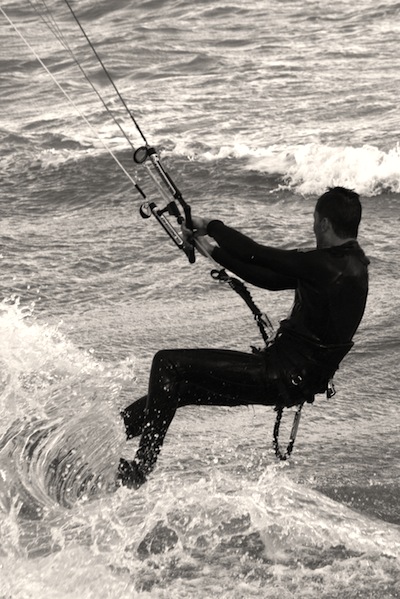 Adventure and high-risk sports is thrilling and exciting. It’s a sport that attracts adventure enthusiasts like Richard Branson and the Secretary of State, John Kerry.
Doctors, presidents, CEO’s actors, and people who love the thrill of an adventure sport, kiteboarding offers “big air” as they fly above the water while maneuvering a giant wave.
It should be no surprise that there is an element of danger and injury in this sport; and although injury studies have not reached a scientific level, there are common injuries that have occurred. … read more
Baseball Injuries of the Wrist & Hand
The Tommy John Surgery and Little Leaguer’s Elbow
With a 13-3 record during the spring and summer of 1974, Los Angeles Dodgers pitcher Tommy John was having an incredible year. Then, mid way through the season, the left-handed sinkerball thrower significantly tore through the ulnar collateral ligament (UCL) on his throwing arm. The UCL, located on the inside aspect of the elbow, comes under extreme stress during the throwing motions and it is impossible to pitch at the major league level without it intact.
The season was over for Tommy John. In fact, up until that point it could have been assumed that his entire career was over. But on September 25, 1974, Tommy became the first person to undergo reconstructive surgery that would allow him to return to the playing field for the 1976 season.
The surgery, now commonly known as Tommy John surgery, replaced the damaged ligament with a tendon from his non-throwing forearm. These days, orthopedic surgeons can take a tendon from a variety of locations, including the hamstring or Achilles tendons. Although the rehabilitation process is lengthy at about one year, athletes have a good chance of recovery. Close to 85% of throwers will be able to achieve the same level of competitiveness once the process is complete.
Tommy John surgery is performed mainly on high level throwing athletes; however, injuries to the same area can plague the younger players as well. On the other end of the spectrum is little leaguer’s elbow. This is also an injury caused by repeated stress to the ulnar collateral ligament, but the difference here is that the force of a child or adolescent pitching a baseball does not cause the ligament to break. Here, the stress leads to an uneven growth between the inside and outside aspects of the elbow. This abnormal bone development may result in cubital tunnel syndrome, which is a compression of the ulnar nerve (funny bone) as it passes through the elbow. This can in turn cause numbness, tingling, or weakness in the elbow or hand.
In some cases of little leaguer’s elbow, there may even be a stress fracture where the UCL attaches.3 The young athlete will have pain with throwing a baseball, and may be tender to the touch over the inside of the elbow. Little league baseball mitigates the risk of this condition developing by setting rest requirements and pitch count limits. All coaches and league officials should follow these regulations. If your child is a little league pitcher, you should make sure that he does not exceed the recommended limits for his age group.
Year round baseball play may also increase the risk of little leaguer’s elbow. In Seattle of course, weather does not permit youth baseball to continue year round, but some pitchers aspiring to improve their skills may seek indoor facilities to continue their practice. In this case, players should follow the guidance of the USA Baseball Medical and Safety Advisory Committee, which states that pitchers should not play for more than nine months total per year.
Pitchers certainly are at risk for arm and hand injuries, but the rest of the team is not immune from getting hurt either. Fractures to the hand may result from getting struck by a pitch while gripping a bat or sliding into a base. Diagnosing a fracture in the hand is usually done with X-ray. Treatment for simple fractures is casting for 6-8 weeks, although surgical fixation may be required for more complex breaks.
One final injury worth discussing is mallet finger, also called baseball finger. This injury is a tearing of the tendon that straightens the most distal joint of the finger. The injury mechanism is usually a “jammed finger”, either from sliding into a base or being struck on the top of the finger with a ball. The inability to fully straighten the finger will usually send the player to a physician, who can make the diagnosis through clinical presentation.
Treatment for this injury usually involves splinting the finger for several weeks. If adequate function has not been restored after splinting or if there was a bone fracture or joint misalignment during the original injury, then surgical repair may be necessary. This could consist of tendon grafting to the damaged finger, or using small pins or screws to fix bone fragments.
Wayne Mitchell Weil, MD, specializes in the surgical and non-surgical treatment of hand and elbow disorders. Dr. Weil uses the latest surgical techniques, including minimally invasive carpal and cubital tunnel releases. Those suffering from pain or reduced functional use of their hand or elbow should contact Dr. Weil for a consultation.
Mariners’ Montero Undergoing Knee Surgery for Torn Meniscus
 The Seattle Times reported from the Mariners Clubhouse that, “Montero has a tear of the meniscus in his left knee and will undergo surgery next week. He is expected to miss four to six weeks.” It is unclear at this point what caused this specific injury.
Although a meniscus tear is painful and will require surgery in this case, there is hope for a great outcome.
Dr. Charles Peterson II commented on this specific case saying, “While Jesus Montero has been having his challenges this year at (and behind) the plate, his meniscus-tear surgery should go fairly smoothly. In most cases of isolated meniscus tears, we can have athletes back to full sports about 6 weeks after surgery. Now, whether this will improve his OBP remains to be seen!”
Below are some symptoms and treatment that may come with a torn meniscus from our Meniscal Tear Article: … read more