Elbow Osteoarthritis

Osteoarthritis occurs when the cartilage surface of the elbow is damaged or becomes worn. This can happen because of a previous injury such as elbow dislocation or fracture. It may occur due to degeneration of the joint cartilage from age. Osteoarthritis usually affects the weightbearing joints, such as the hip and knee.

The elbow is one of the least affected joints due to its well matched joint surfaces and strong stabilizing ligaments. This makes the joint able to tolerate large forces across it without becoming unstable.

Olecranon (Elbow) Fractures

Olecranon fracture is a fragmentation of the tip of the elbow. When you bend your elbow, you can easily feel its “tip,” a bony prominence that extends from one of the lower arm bones (the ulna). That tip is called the olecranon (oh-lek’-rah-nun). It is positioned directly under the skin of the elbow, without much protection from muscles or other soft tissues. So it can easily break if you experience a direct blow to the elbow or fall on a bent elbow.

Elbow (Olecranon) Bursitis

Description
The bursa is a slippery sac between the loose skin and the bones of your elbow. The bursa allows the skin to move freely over the underlying bone. It is located at the tip of the elbow. Normally, the bursa is flat and it’s hard to tell it is even there. If the bursa becomes irritated or inflamed, a condition known as elbow bursitis develops.

Dislocated Elbow

Description
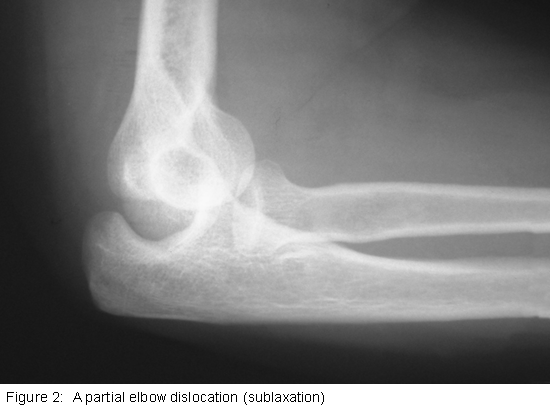
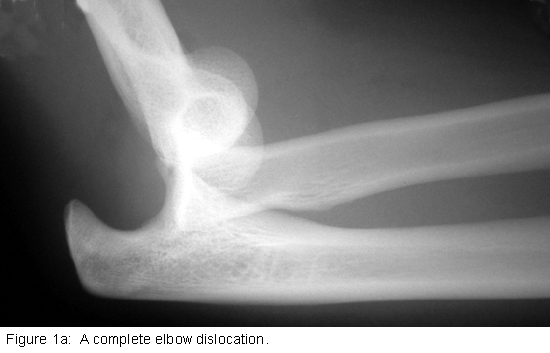
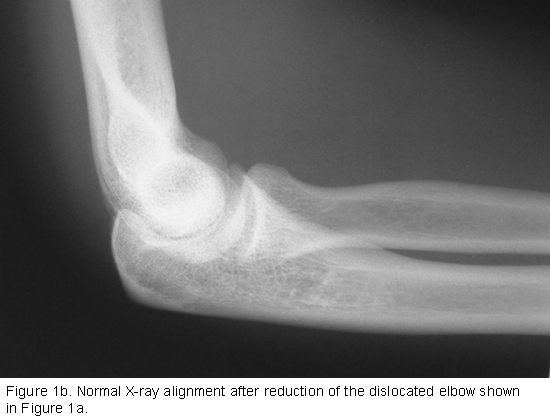
When the joint surfaces of an elbow are separated, the elbow is dislocated. Elbow dislocations can be complete or partial. In a complete dislocation, the joint surfaces are completely separated (Figure 1a). In a partial dislocation, the joint surfaces are only partly separated. A partial dislocation is also called a subluxation (Figure 2).
cons1_380_174
cons2_380_174
cons3_380_174

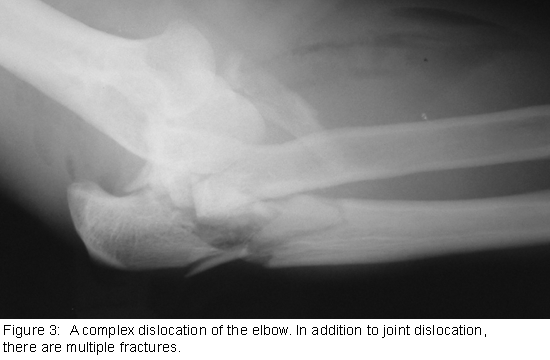
The elbow is stable due to bone surfaces, ligaments (which connect bones) and muscles. When an elbow dislocates, all of these can be injured to different degrees. A simple dislocation does not have any major bone injury. A complex dislocation can have severe bone and ligament injuries (Figure 3). In the most severe dislocations, there is injury to the blood vessels and nerves that travel across the elbow. If this happens, there is a risk of losing the arm.
cons1_381_1741

Three bones come together to make up the elbow joint (Figure 4). The humerus bone is in the upper part of the arm and attaches to the two bones of the forearm (ulna and radius). Each of these bones has a very distinct shape. Ligaments connect all three bones together.

Broken Arm

A broken arm is a common injury. Counting all fractures, about one in every 20 involve the upper arm bone (humerus). Children are more likely to break the lower arm bones (radius and ulna). Falling on an outstretched hand or being in a car crash or some other type of accident is usually the cause of a broken arm. Most people know right away if their arm broke, because there may be a snap or a loud cracking sound. The broken arm may appear deformed and be swollen, bruised and bleeding. A person with a broken arm usually has:

  • Extreme pain at the site of the injury.
  • Pain increased by any movement.
  • Loss of normal use of the arm.