FOR IMMEDIATE RELEASE

Contact: Hazel Valdez
Email: hazel@launchmd.com Untitled1

FOR IMMEDIATE RELEASE

Orthopedic Specialists of Seattle Speaker Series on Orthopedic Health and Information Topics Continues through December 2013

Seattle, WA – During the last quarter of 2013, the physicians of Orthopedic Specialists of Seattle (OSS) have been speaking to the community and the greater Seattle population, on orthopedic topics including Joint Replacement, Relief from Hand and Wrist Pain, and Relief from Foot and Ankle Pain at the Swedish Ballard Hospital campus.

Dr. Ruhlman of OSS will be rounding out the Speaker Series with his topic, Relief from Your Hand and Wrist Pain on Wednesday, December 4, 2013 at the Swedish Ballard Hospital campus from 6:00 pm – 8:00 pm. Dr. Ruhlman will discuss treatments for different types of fractures; ways to treat arthritis in the wrist, thumbs and fingers; and how to prevent and treat carpal tunnel syndrome and other overuse conditions. Dr. Ruhlman trained as an Orthopedic Surgeon locally at the University of Washington and spent additional time at Harvard training in the complex disorders affecting the Hand, Shoulder and Elbow. “By using what I have learned, I strive to give you the top orthopedic care by not only achieving superior technical results, but to spend the time necessary to help you understand your injury and so we can work towards your specific goals and needs,” states Dr. Ruhlman.

To find out more and register for this class, visit: https://www.eventsvc.com/swedishhealth/seattle/event/4852f607-7ea9-4123-b207-c4154988bc27.

Physicians at OSS perform highly specialized procedures for orthopedic surgery and general orthopedic care for adults and children. Each one of their eight physicians strives to be a leader in orthopedic medicine. They have extensive training and experience in general orthopedics, trauma, fracture care, total joint replacement, sports medicine, non-surgical treatment and overuse conditions. Treatment of injuries is performed in a relaxed setting, with an expert surgeon, as well as state-of-the art equipment. OSS is also the only orthopedic center in the state of Washington that offers Sonocur, a non-surgical treatment for tendonitis. Their comprehensive orthopedic approach provides patients with the ability to continue their active lifestyles as well as peace of mind.

Seattle Seahawks WR, Percy Harvin and His Hip Labral Tear

Percy Harvin, Seattle Seahawk’s Wide Receiver is waiting out another week before he can return to the football playing field. NFL Spinzone reports, “Harvin was able to return to practice a couple of weeks ago, but the Seahawks have prudently decided to rest him. He has recovered quickly and well from off-season hip surgery, but Pete Carroll is 100% correct in being as cautious as possible with their new star receiver. The last thing they need is for the oft-injured Harvin to have a setback, especially since the 8-1 Seahawks clearly have their eyes set on a Super Bowl-winning season.”

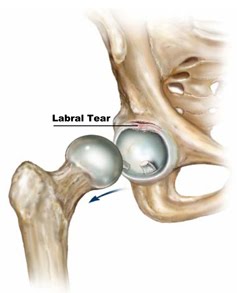
The labrum is a unique structure found in the hip. The labrum is a specialized structure that lines the edge or rim of the hip socket. The shape and function of the labrum can be most easily understood as being similar to a bumper cushion on a pool table. The shape of the labrum is triangular in cross-section. The labrum acts as a cushion between the ball and socket of the hip joint during flexion of the hip.

The labrum is filled with nerve fibers that make tears in the labrum very painful.

What causes a labral tear?hip-labral-tear

Labral tears typically occur from:

  • Repetitive motion. Physical activity that requires one to repeatedly pivot the body can lead to joint wear and tear. This is common in athletes such as golfers and baseball players, who must repeatedly twist their bodies to hit a ball.
  • Osteoarthritis. Increased friction from osteoarthritis symptoms inside the hip joint may lead to labral tear.
  • Trauma. Dislocation or violent, direct impact to the hip joint may cause labral tears. This is common in athletes and victims of car accidents.
  • Birth defects. Some people are born with abnormal hip structures, which increase the progression of wear and tear on the hip joint. These problems may lead to labral tears.

What does it feel like?

Some labral tears cause no signs or symptoms; however, when symptoms are present, they include:

  • Radiating pain in the hip and groin
  • A catching or locking sensation in the hip joint
  • Stiffness in the joint
  • A limited range of motion

How do I know if I have a labral tear?

A physical examination by your doctor will help diagnose the cause of your symptoms. X-rays will allow your physician to take a closer look at the bone and rule out other possible underlying conditions. Magnetic resonance imaging (MRI) may also be used to further examine the soft tissues.

How are labral tears treated?

The level of treatment depends upon the severity of the condition. Some patients recover in only a few weeks using conservative treatments. However, patients with severe labral tearing may require surgery. One or a combination of these treatments may be used:

  • Rest and activity modification. By resting and allowing the inflammation of the joint to settle down, symptoms may be alleviated.
  • Medication. Anti-inflammatory medicines may help alleviate the pain and inflammation associated with labral tears. Your doctor may also recommend cortisone injections.
  • Physical therapy. Learning new exercises can help maximize hip range of motion, strength, and stability.
  • Surgery. In general, labral tears can be either repaired or trimmed during an arthroscopic procedure. Depending on the severity of the tear, the surgeon may cut out and remove the torn piece of labrum or repair the torn tissue by sewing it back together.

According to Dr. Watt, “Hopefully Percy will continue his recovery and return to the field soon. If you think you have labral tear or hip condition that is not getting better, I would be happy to evaluate your hip and devise an appropriate treatment plan.”


In the words of Russell Wilson, “Go Hawks!”


Rotator Cuff Tears and Repairs

Rotator Cuff Tears and Repairs

In the world of orthopedic surgery, there are few body parts as notorious as the rotator cuff. It’s one of those medical terms that has become a household name, and usually comes with a wince and a sympathetic nod when we hear it. Most people know of someone, a friend or family member, who has injured this particular part of the shoulder. We also see it in the sports news quite often.

In fact, now that football season is in full swing, we may hear more about Seattle Seahawks defensive lineman Michael Bennett who was diagnosed with a rotator cuff tear earlier this year. He played through the injury last season and plans to do it again this year, although he will likely need surgery in the off-season.

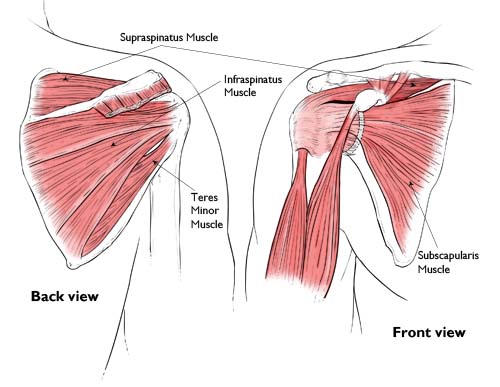
The rotator cuff is a group of four small muscles and tendons that surround the head of the shoulder. Their job is not so much to move the arm through space, but to provide dynamic stability to the shoulder. This means that as the larger muscles of the chest and shoulder create arm movement, the smaller rotator cuff muscles pull the upper arm into the shoulder socket. This design allows the ligaments of the shoulder to be relatively loose so that we can enjoy a vast degree of mobility, being able to reach in a near three hundred and sixty degree range of motion.

Tearing of the rotator cuff can happen in two ways. An acute tear happens suddenly, such as when you fall on an outstretched hand, or lifting a heavy object. There is generally the sudden onset of pain and a corresponding loss of function of the arm, to varying degrees.Tears can also happen slowly over time. As we age, the tendons of the rotator cuff become weaker and gradually fray. This is particularly so with the supraspinatous tendon, located on the top of the shoulder blade.

This muscle and tendon tends to get pinched between the shoulder blade and the arm bone, especially if theother rotator cuff muscles are weak. The supraspinatous also has poor blood supply, sotears often do not heal on their own, making surgical repair necessary to restore function.-1
Symptoms of a Rotator Cuff Tear

Symptoms of a rotator cuff tear include pain with movement of the shoulder and tenderness to touch. Inability to lift even household objects out to the side or overhead is also typical. Sometimes a person will not be able to actively lift the arm overhead due to abnormal movement within the joint itself.

Another indicator is a prior history of shoulder tendonitis or bursitis as this would point to excessive stress on the rotator cuff over time.

Treatment can be conservative for some tears, including physical therapy to improve shoulder mobility and progressively strengthen the cuff muscles. However, the majority of tears will likely require surgery if function of the shoulder is to be restored. Rotator cuff surgery has come a long ways in recent years, with many surgeries being arthroscopic.

This is a minimally invasive technique where the surgeon inserts a camera and surgical tools through small incisions in the shoulder. The instruments are only about a centimeter in diameter and can burrow through layers of muscle on top of the rotator cuff, whereas in past years these muscles had to be cut, making for longer recovery times.

During thesurgery, the torn rotator cuff tendon will be sutured together. The surgeon will also clean away any bone spurs that may have contributed to a degenerative tear.

If the tear is complex or involves additional procedures such as tendon transfers due to excessive degeneration of the rotator cuff tendon, then the surgeon may need to open the shoulder with a slightly longer incision. It involves more cutting of shoulder musculature and may slightly lengthen recovery time; however, from time to time it is necessary.

Fortunately, most repairs will not require this technique.Recovery is generally a four to six month process, involving four phases:

  • Phase 1 (protection): Lasting from day one to four weeks, this stage of healing involves protecting the surgery. You will be required to wear a sling during most parts of the day. Gentle mobility exercises may be prescribed.
  • Phase 2 (passive motion): Lasting until the sixth week, you will be prescribed physical therapy and begin moving the shoulder with assistance within a prescribed range of motion.
  • Phase 3 (active motion): From weeks six through twelve, the focus will be on moving the arm and shoulder on your own, increasing the active range of motion.
  • Phase 4 (strengthening): You should have improved mobility at this time, allowing you to focus on building full strength and function of the arm.

Undergoing a rotator cuff repair can be a lengthy process. The amount of time that you will be required to be away from work will vary depending on the physical demands of your job. This will all be discussed in depth during pre-operative visits so that you may plan accordingly.

However, if surgery is recommended, you should not delay for long, as the torn tissue becomes weak and shortened over time, making a successful repair more difficult.If you are experiencing persistent shoulder pain, please feel free to contact my office to arrange a consultation.