
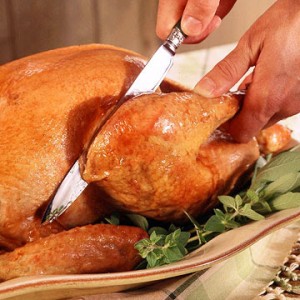
Carving Safety Tips for this Holiday Season

Carving article photoThanksgiving is just around the corner and almost everyone is planning a big feast, strategizing for the family football rematch, watching the Macy’s Day parade and of course, NFL football on TV.

With all these things going on in one day, there is no bigger star than the Thanksgiving turkey as it is paraded from the kitchen into the dining room where someone will be carving the revered bird. This holiday season, Orthopedic Specialists would like to caution all the carvers out there as they carve the main course and not their hands.

People sustain hand injuries during Thanksgiving and the entire holiday season. When friends and family are watching you as you carve the turkey, you may feel a little overwhelmed, so focus; don’t let your turkey day celebrations go fowl this year because of a hand injury.

Safety Tips for Thanksgiving Feast

Follow these easy tips and get your bird on the table in time so guests can start gobbling:

  1. Never cut towards yourself. One slip of the knife can cause a horrific injury. While carving a turkey or cutting a pumpkin your free hand should be placed opposite the side you are carving towards. Don’t place your hand underneath the blade to catch the slice of meat.
  2. Keep your cutting area well-lit and dry. Good lighting will help prevent an accidental cut of the finger and making sure your cutting surface is dry will prevent ingredients from slipping while chopping.
  3. Keep your knife handles dry. A wet handle can prove slippery and cause your hand to slip down onto the blade resulting in a nasty cut.
  4. Keep all cutting utensils sharp. A sharp knife will never need to be forced to cut, chop, carve or slice. A knife too dull to cut properly is still sharp enough to cause an injury.
  5. Use an electric knife to ease the carving of the turkey or ham.
  6. Use kitchen sheers to tackle the job of cutting bones and joints.
  7. Leave meat and pumpkin carving to the adults. Children have not yet developed the dexterity skills necessary to safely handle sharp utensils.
  8. Lastly, should you cut your finger or hand, bleeding from minor cuts will often stop on their own by applying direct pressure to the wound with a clean cloth.

Visit an emergency room or a hand surgeon if:

  1. Continuous pressure does not stop the bleeding after 15 minutes
  2. You notice persistent numbness or tingling in the fingertip
  3. You are unsure of your tetanus immunization status
  4. You are unable to thoroughly cleanse the wound by rinsing with a mild soap and plenty of clean water

Dr. Weil states, “I often see patients whose holiday season has been ruined by an accident in the kitchen. The most common kitchen injuries that I treat are lacerations. Lacerations sustained while carving pumpkins, turkeys, and other holiday fare can be quite serious. These injuries can include cut nerves, arteries and tendons. These types of injuries require immediate surgical management to restore function. Treatment can include microscope assisted nerve repairs, artery repairs, and tendon repairs. If you sustain a laceration where you lose sensation to your finger or hand or are unable to bend your finger please seek medical treatment immediately.”

These simple tips will help you enjoy that bird and the rest of your holiday season. If you would like more information on specialty care of the hand, call Orthopedic Specialists and make an appointment with one of our expert, orthopedic doctors at (206) 633-8100.
Fall Clean-Up and Rake Safety

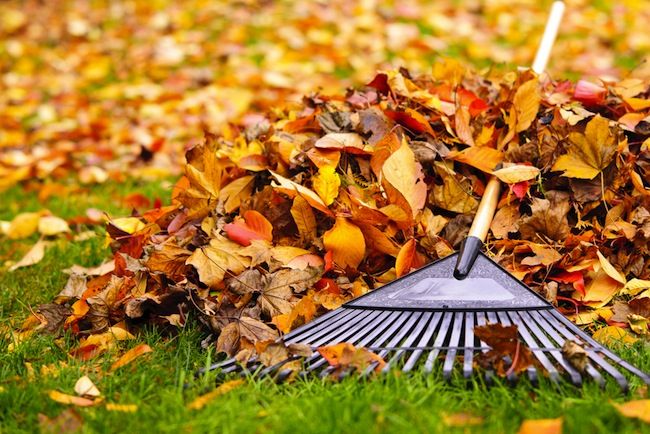
Fall is a beautiful time of the year when the leaves turn color and in the Pacific Northwest, it is sometimes also wet because of the rain. Preparation and taking a common-sense approach to raking the beautiful leaves is important and raking requires a number of different activities, including twisting, bending, lifting, and reaching, that use several different muscle groups. Improper use of lawn tools along with the potential for tool-related accidents further compounds the risk of injury to the bones and muscles.

Fall leaves and Rake
Raking leaves is a vigorous exercise, and you need to warm up for at least 10 minutes with some stretching and light exercise. You also need to:

Do some form of light exercise (such as walking) for 10 minutes to warm up the muscles before raking or other yard clean-up

Use a rake that’s comfortable for your height and strength. Wear gloves or use rakes with padded handles to prevent blisters. If you have a rake that is too short you will have to bend over which will cause strain on your back. It is the repetitive movement in raking, not the weight that can strain the muscle.

Don’t wear hats or scarves that interfere with vision and beware of large rocks, low branches, trees stumps and uneven surfaces.

Alternate your leg and arm positions often. When you pick up piles of leaves, bend at the knees, not the waist. Use your legs to shift your weight rather than twisting your back. Do not throw leaves over your shoulder or to the side while raking as this involves twisting movements that can overly strain the muscles in your back. As a reminder from Dr. Shapiro, “Take care of your shoulders and use more bags, filled ¾ full. Lifting and throwing heavy, wet bags is a common way to hurt your shoulders and neck.”

Wet leaves can be slippery. Wear shoes or boots with slip-resistant soles.

Don’t overfill leaf bags, especially if the leaves are wet. To avoid back injury, you should be able to carry the bags comfortably.

When raking, don’t throw leaves over your shoulder or to the side, because that kind of twisting motion places too much stress on the back.

Don’t overdo it. Raking is an aerobic activity – you may need to take frequent breaks or slow your pace if you are an infrequent exerciser.

If you do experience a new strain or sprain, proper care can be easily remembered by using the acronym, RICE:

  • Rest (minimize movement of the injured body part)
  • Ice (apply a cold pack)
  • Compression (light pressure wrap to the affected body part can help minimize leakage of blood and swelling)
  • Elevation (raise the body part up so that the pressure from the blood and tissue swelling the affected area is reduced as the fluids drain from the area by gravity)

If you do experience an injury during your Fall clean-up, call Orthopedic Specialists of Seattle and make an appointment to see one of our expert doctors.

5 Common Hockey Injuries

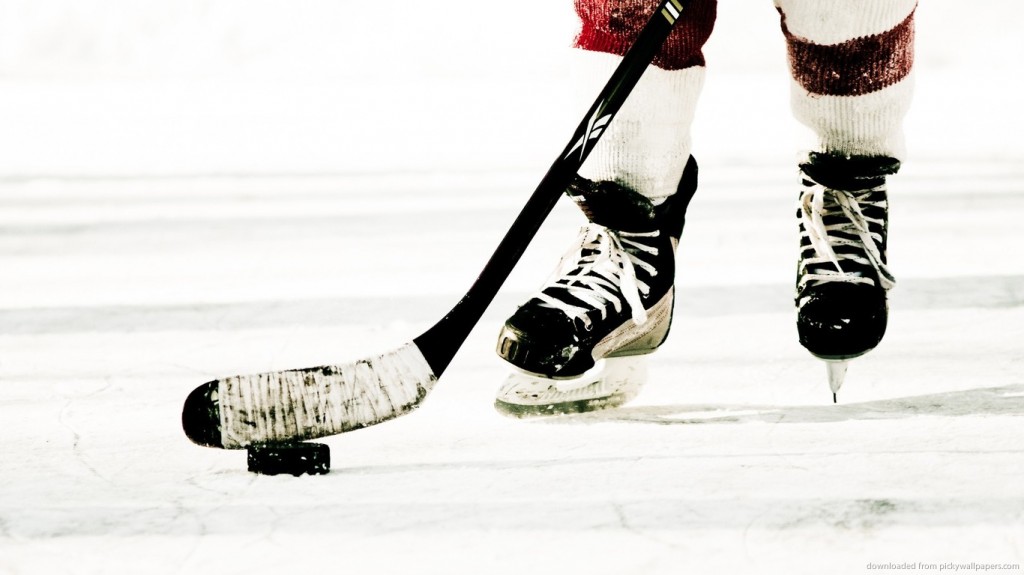
Hockey photo

The regular NHL season is well underway and the Seattle Thunderbirds are respectively improving their stats with their recent win over the Vancouver Giants at ShoWare Center.

In the regular season as well as the off season, players experience a variety of sports-related injuries as a result. Ice hockey is a contact sport where the players and the puck move at high speeds, so when players run into each other or objects, great force is used. This is why hockey is considered a collision sport. Injuries are fairly common, but efforts can be made to avoid them with training and proper equipment. Listed below are five common injuries that can occur while playing hockey.

AC Joint Injury

The acromioclavicular joint, or AC joint, is one of the joints in the shoulder responsible for motion and stability. The ligaments that hold the AC joint together can be torn through sudden impact to the shoulder, which can cause separation to occur in the AC joint. This sudden impact can happen in hockey when players skating at high speeds collide with one another or into a rigid surface. Swelling, bruising, pain, and motion range loss are all symptoms of AC joint separation. There may also be visible bumps on the shoulder if the bones separate.

Shoulder Dislocation

Shoulder dislocation generally refers to a dislocation in the glenohumeral joint in the shoulder. This happens when the top of the humerus, or upper arm bone, is forced out of the glenoid, the socket in the shoulder joint it usually nestles in. If a player falls or receives a heavy blow or sudden impact on the shoulder, it can cause dislocation if the upper arm is forced to move in an abnormal way. Symptoms of shoulder dislocation include pain, weakness, and mobility issues. The arm may also appear to hang incorrectly off the shoulder.

Muscle Strain

Muscle strain occurs when a muscle is pushed past its limit. This can happen if a player’s muscle is suddenly presented with a heavy load or stretched beyond its normal ability. If a player’s muscles are tight but not warmed up or not conditioned well, tearing or straining is a risk. Symptoms of a muscle tear include pain at rest or when the muscle is used, and weakness or inability to use the muscle.

Meniscus Injury

The meniscus is a C-shaped piece of cartilage in the knee. There are two menisci in each knee joint, and if they are torn they can affect stability in the knee. This tearing can happen if the cartilage is worn down or through the quick movements and stress put on the knees by ice skating. Symptoms vary depending on how and where the meniscus is torn, but symptoms can include pain, instability or feeling the knee “giving,” stiffness, swelling, and an impaired range of motion. Sliding, popping, or locking may occur if the tear is left untreated because loose fragments from the meniscus tear will drift into the joint.

Gamekeeper’s Thumb

The ulnar collateral ligament, or UCL, connects the bones at the base of the thumb, which prevents the thumb from moving too far from the hand. When an acute sprain or tear of the UCL occurs, it is called a UCL injury. When the injury is chronic and develops over time from repeated UCL stretching, it’s called gamekeeper’s thumb. UCL injuries are commonly caused by injury or trauma in which the thumb is bent away from the hand at the MCP joint. This can happen in sports hockey, or in any situation in which a fall is landed on an outstretched hand.

This injury might also be sustained when a person is gripping something that is suddenly moving, like a hockey stick during a fall. Swelling, pain, and tenderness on the ulnar side of the thumb are all symptoms of UCL injury. You may also have difficulty pinching and gripping with the thumb, and you may have limitations in your range of movement. In severe cases, a bump under the skin, called a Stener lesion, may form due to the ends of the torn ligament being held apart by a nearby tendon.

If you believe you are suffering from a sports injury and need specialized orthopedic care, Orthopedic Specialists of Seattle has excellent treatment options available for you. Please feel free to contact Orthopedic Specialists of Seattle at (206) 633-8100 to schedule an appointment.